Home › Quantum and atomic physics
Quantum and atomic physics
Enter the world of photons, electrons and nuclei: light knocks electrons out of a metal, atoms give line spectra, alpha particles bounce off a nucleus and interference builds up from single particles.
8 labs
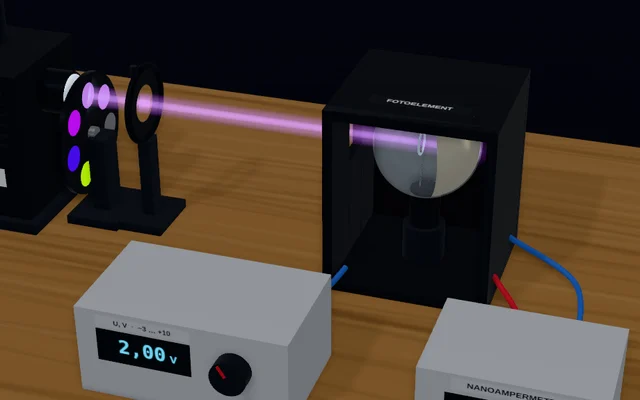
Photoelectric effect
Light knocks electrons out of a metal: hν = A + Eₖ. Measure the stopping voltage to find Planck's constant and the work function. The red limit.
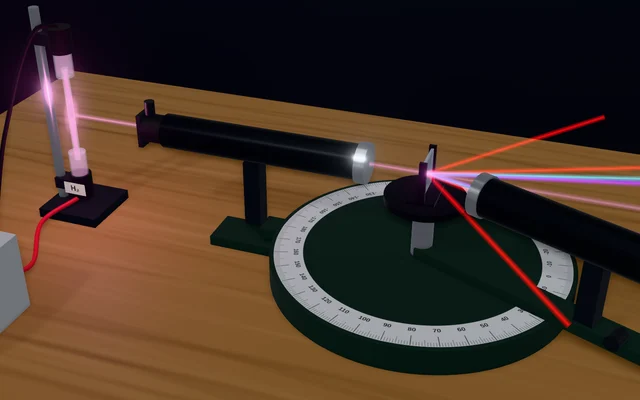
Atomic spectra
Gas line spectra, a diffraction-grating spectrometer, the hydrogen Balmer series, the Bohr model and measuring the Rydberg constant.
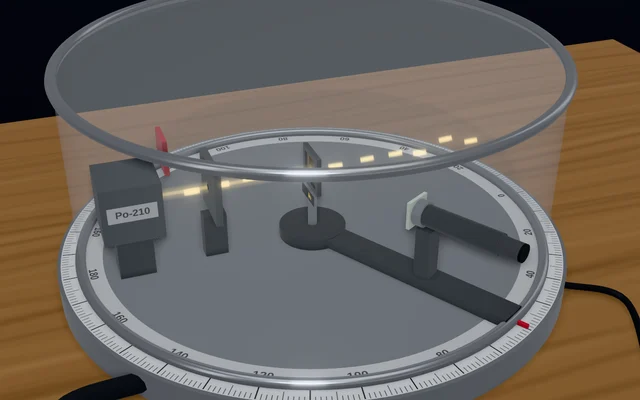
Rutherford scattering
Alpha particles scattering off gold foil: the discovery of the atomic nucleus. Test Rutherford's formula and measure the nuclear charge.
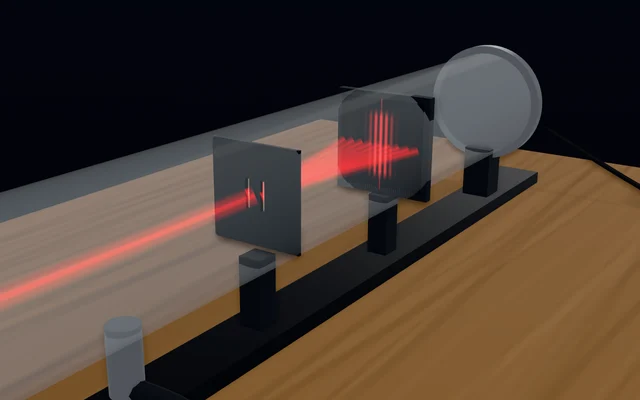
Quantum interference
The double-slit experiment with photons, electrons, neutrons and atoms. Bands build up from single particles; de Broglie λ = h/(mv).
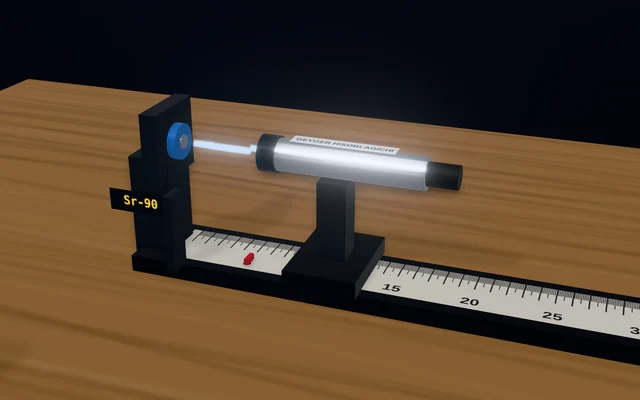
Radioactivity
Alpha, beta and gamma radiation, a Geiger counter and the natural background. Measure a half-life and absorption in lead.
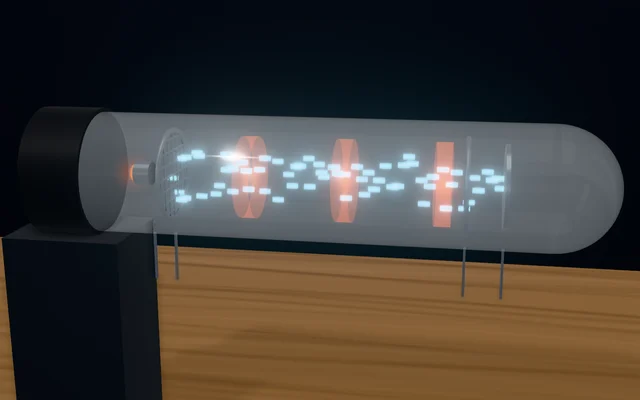
Franck–Hertz experiment
Electrons excite mercury and neon atoms: the anode current drops every 4.9 V. Measure the excitation energy and see atomic levels.
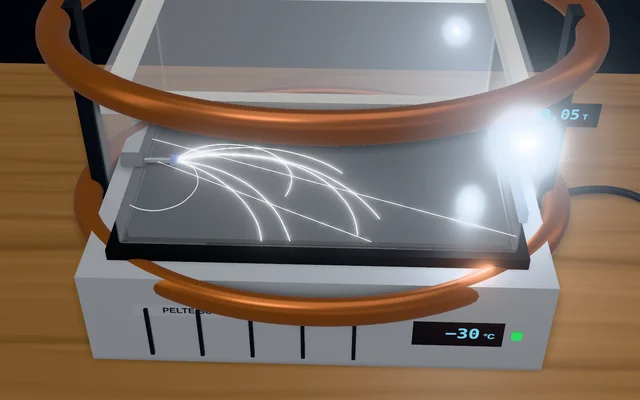
Cloud chamber
See charged-particle tracks: alpha, beta and cosmic muons. Tracks curve in a magnetic field. Measure α energy and β momentum.
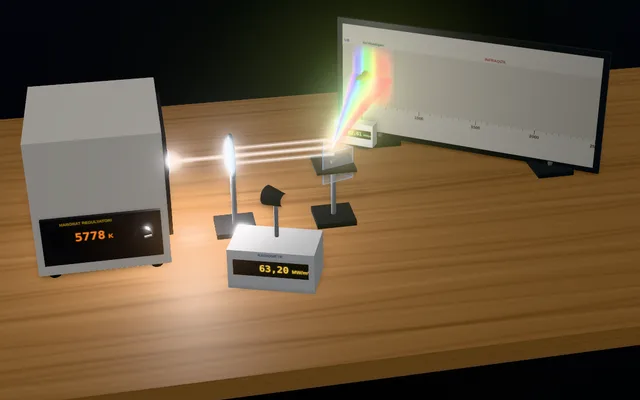
Thermal radiation
Heat the furnace and its colour shifts from red to white. The black-body spectrum, the Planck curve and Wien's law.