Home › Nobel Prize laureates › 2016–2026 › 2020
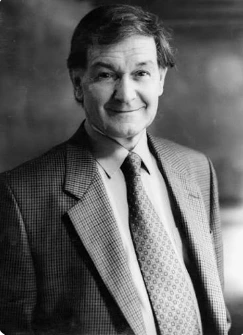
Roger Penrose
born 1931 · UK
Prize motivation“for the discovery that black hole formation is a robust prediction of the general theory of relativity”
Shared the prize with: Reinhard Genzel, Andrea Ghez
The discovery
Einstein's general relativity allowed black holes, but for a long time they were thought to form only under ideal, perfectly spherical conditions and not to exist in nature. Einstein himself did not believe in them.
In 1965 Roger Penrose introduced a new mathematical tool — the “trapped surface” — and proved that if enough matter is squeezed together, a black hole will inevitably form, whatever its shape.
His proof showed that at the heart of a black hole lies a singularity, a point of infinite density where the known laws of physics break down. The paper is regarded as one of the most important advances in general relativity since Einstein.
Life
Born in 1931 in Colchester, England, he earned a doctorate in algebraic geometry at the University of Cambridge in 1957 before turning to theoretical physics.
He was professor of mathematics at the University of Oxford, where he is now emeritus, and with Stephen Hawking proved key theorems about black holes and the beginning of the universe. He has also written popular science books.
Where it is used today
Penrose's ideas underpin modern theories of black holes and the beginning of the universe, and his “Penrose diagrams” have become an important tool for physicists.
His predictions about black holes have been confirmed by gravitational waves and the first images of black holes.
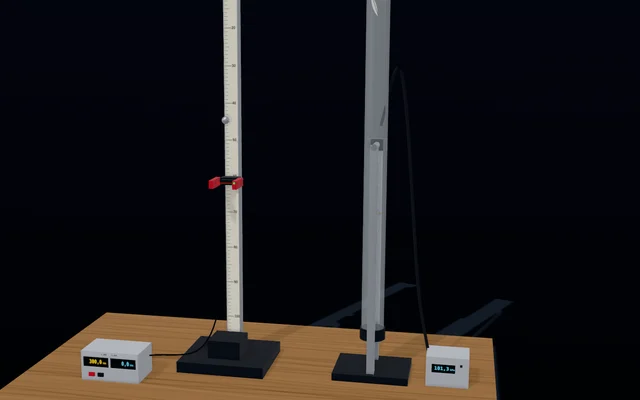 Try it in the labFree fall3D lab on this site →Share on Telegram
Sources: NobelPrize.org — 2020