Home › Nobel Prize laureates › 2016–2026 › 2021
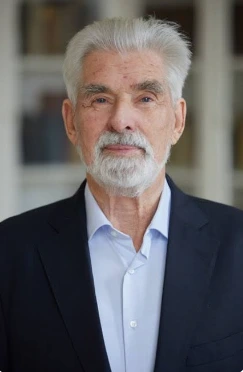
Klaus Hasselmann
born 1931 · Germany
Prize motivation“for the physical modelling of Earth's climate, quantifying variability and reliably predicting global warming”
Shared the prize with: Syukuro Manabe, Giorgio Parisi
The discovery
Climate is a highly complex system in which air, ocean, ice and land interact. Earth receives heat from the Sun and returns part of it to space as infrared light; carbon dioxide and water vapour in the air trap some of that light.
In the 1960s Syukuro Manabe built the first model to combine the radiation balance with the rising of air. He calculated that doubling the carbon dioxide in the air would raise the surface temperature by more than 2 °C.
In the 1970s Klaus Hasselmann created a model linking weather and climate, showing that climate can be reliably predicted even though weather is chaotic. He also developed methods to find the “fingerprints” of human influence among natural variations, proving that warming is driven mainly by human activity.
Life
Born in 1931 in Hamburg, he moved with his family to England in 1934 and lived there until 1949. He studied physics and mathematics at the University of Hamburg and earned his doctorate at the University of Göttingen in 1957.
In 1975 he became founding director of the Max Planck Institute for Meteorology in Hamburg, leading it until 1999. He began his career studying ocean waves.
Where it is used today
Climate models are the foundation of the reports of the Intergovernmental Panel on Climate Change (IPCC), on which international climate agreements are based.
They are used to assess droughts, floods and heatwaves and to plan agriculture and water resources.
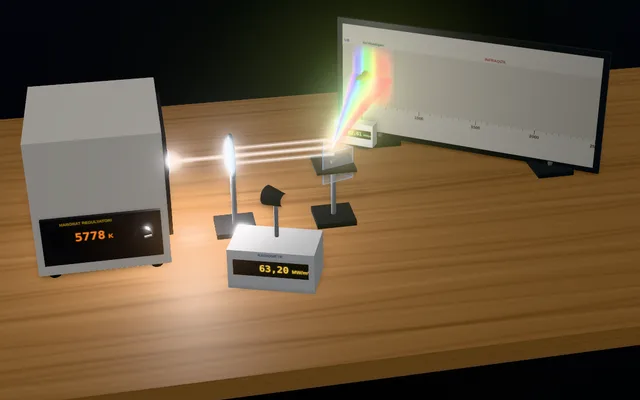 Try it in the labThermal radiation3D lab on this site →Share on Telegram
Sources: NobelPrize.org — 2021