Home › Nobel Prize laureates › 2016–2026 › 2023

Anne L'Huillier
born 1958 · France / Sweden
Prize motivation“for experimental methods that generate attosecond pulses of light for the study of electron dynamics in matter”
Shared the prize with: Pierre Agostini, Ferenc Krausz
The discovery
Electrons inside atoms and molecules move extremely fast, changing over attoseconds — billionths of a billionth of a second. Capturing such fast motion needs an even shorter flash, just as a sharp photo of a galloping horse needs a very brief exposure.
In 1987 Anne L'Huillier discovered that an infrared laser beam passing through a noble gas produces many “overtones” — light of much higher frequency. Added together (interfering), these could form very short flashes.
In 2001 Pierre Agostini produced and measured a train of flashes each lasting just 250 attoseconds, and that same year Ferenc Krausz isolated a single 650-attosecond pulse, opening a new “door” into the world of electrons.
Life
Born in 1958 in Paris, she earned her doctorate at Pierre and Marie Curie University in 1986 and worked at the Saclay research centre.
Since the 1990s she has worked at Lund University in Sweden, where she is professor of atomic physics. She is the fifth woman to win the Nobel Prize in Physics.
Where it is used today
Attosecond pulses let scientists watch electrons moving in atoms and molecules, helping explain how chemical reactions begin.
In future they may help build faster electronics and detect diseases early from molecular “fingerprints” in blood.
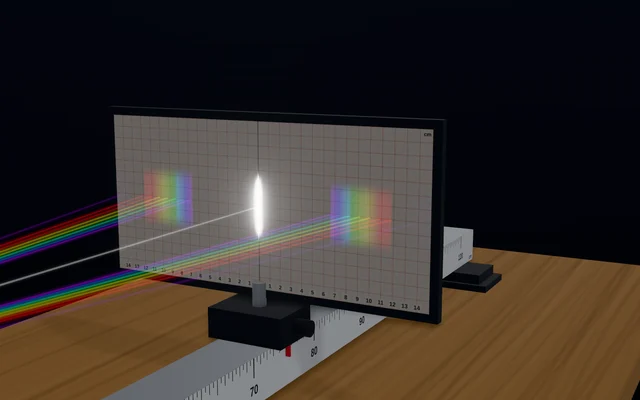 Try it in the labInterference3D lab on this site →Share on Telegram
Sources: NobelPrize.org — 2023