Chang'e-5 samples show lunar volcanoes erupted just 2 billion years ago
The first results appeared in Science on 7 October 2021, followed by papers in Nature on 19 October.
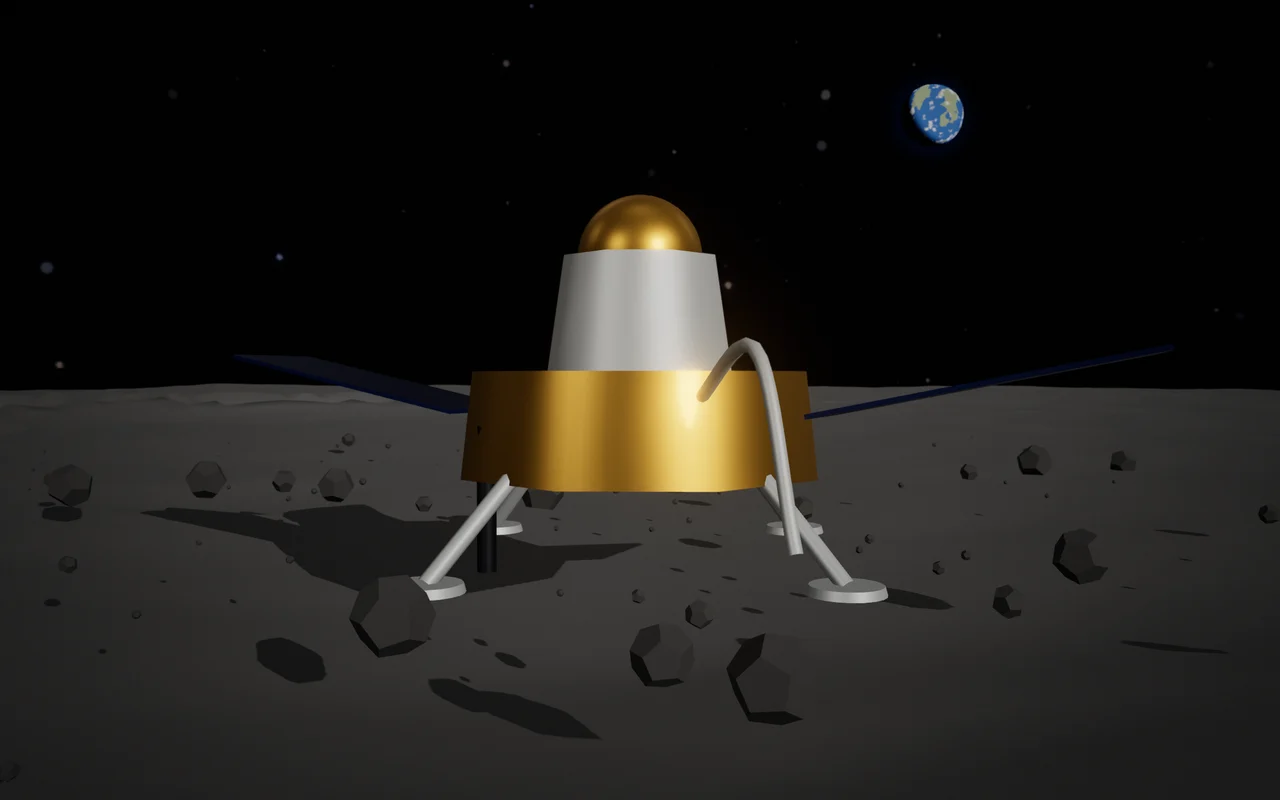
Image: Virtual Lab (3D illustration)
Chang'e-5 landed in December 2020 on the dark plain called the Ocean of Storms, collected samples with a drill and scoop, and returned 1.73 kilograms of lunar soil and rock — the first lunar samples brought back since 1976.
The site was chosen deliberately: crater counts suggested its lava flows were among the youngest on the Moon, since fewer craters mean a younger surface. But that method needed checking against samples of precisely known age.
Scientists measured the ratio of uranium and lead isotopes. Uranium decays very slowly into lead, so the ratio reveals when the rock solidified — a radioactive clock. The answer was about 2.0 billion years, whereas the previous youngest lunar volcanic rocks formed 2.8–2.9 billion years ago.
That raised a new puzzle: the small Moon should have cooled quickly, and the lava's source held neither extra water nor extra heat-producing radioactive elements. Something else must have kept volcanism going — and the new age also helped calibrate crater counting.
 Try it in the labRadioactivity3D lab on this site →Share on Telegram
Sources: Astronomy · Nature (DOI)