Breakthrough of the year: quantum computers learn to fix their own errors
Google Quantum AI's result appeared in Nature on 9 December 2024; the Harvard–MIT–QuEra work was also published in Nature.
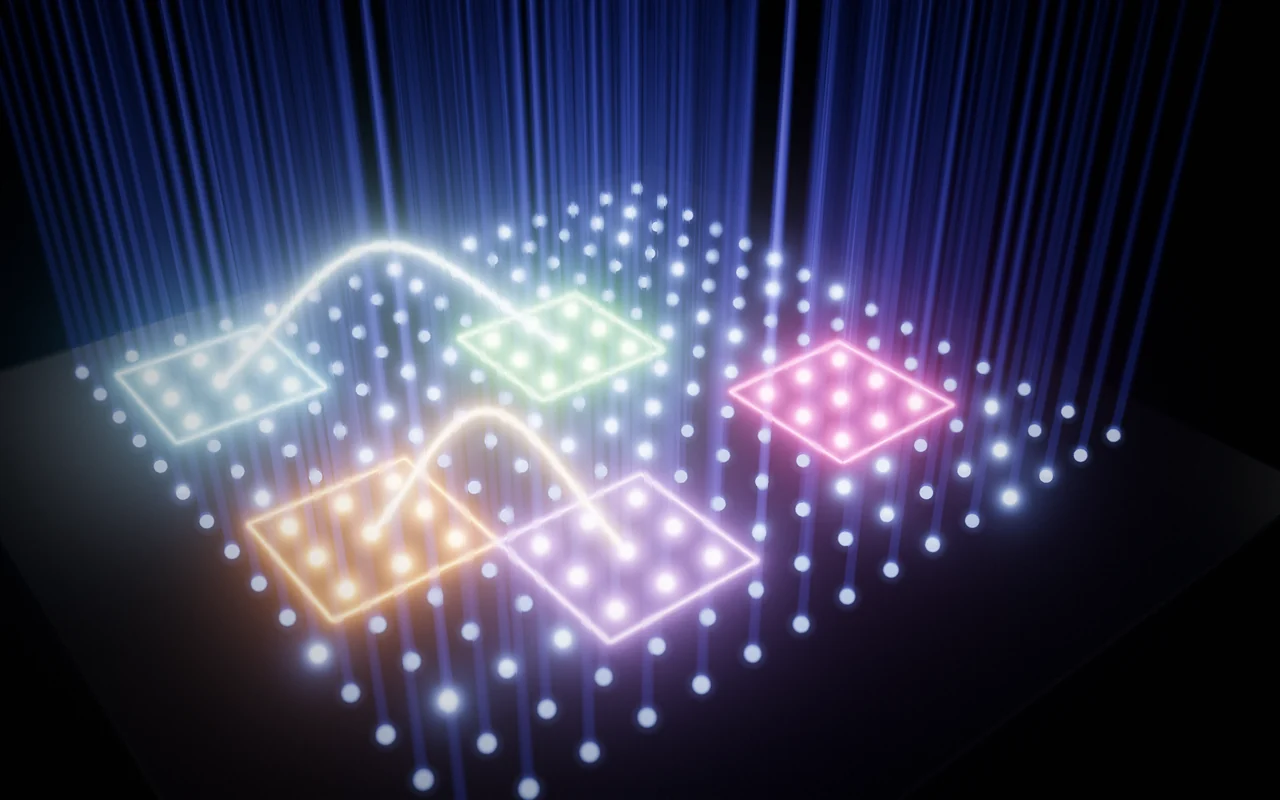
Image: Virtual Lab (3D illustration)
The basic building block of a quantum computer is the qubit, and it is extremely fragile: the slightest heat or electromagnetic noise destroys its state. Normally, the more qubits you add, the more errors pile up and the computation becomes useless.
The fix is to combine many physical qubits into one 'logical qubit'. They watch over one another and correct an error as soon as it appears. But this only helps if each qubit is accurate enough; that dividing line is called the 'threshold'.
Google's 105-qubit Willow chip became the first system to operate below this threshold: as the logical qubit grew, its error rate fell exponentially. The same chip ran a benchmark calculation in under five minutes that would take one of the fastest supercomputers 10 septillion (10²⁵) years.
Researchers at Harvard, MIT and QuEra took a different route. Using rubidium atoms held in laser 'tweezers', they built 48 logical qubits and ran algorithms that correct errors during the computation. The atoms can be moved around so that any pair can be linked.
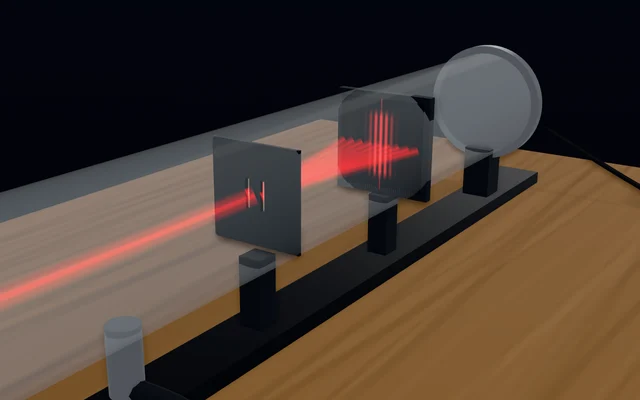 Try it in the labQuantum interference3D lab on this site →Share on Telegram
Sources: Google · Physics World