Hydrogen becomes a frictionless superfluid for the first time
On 21 February the results were published in Science Advances.
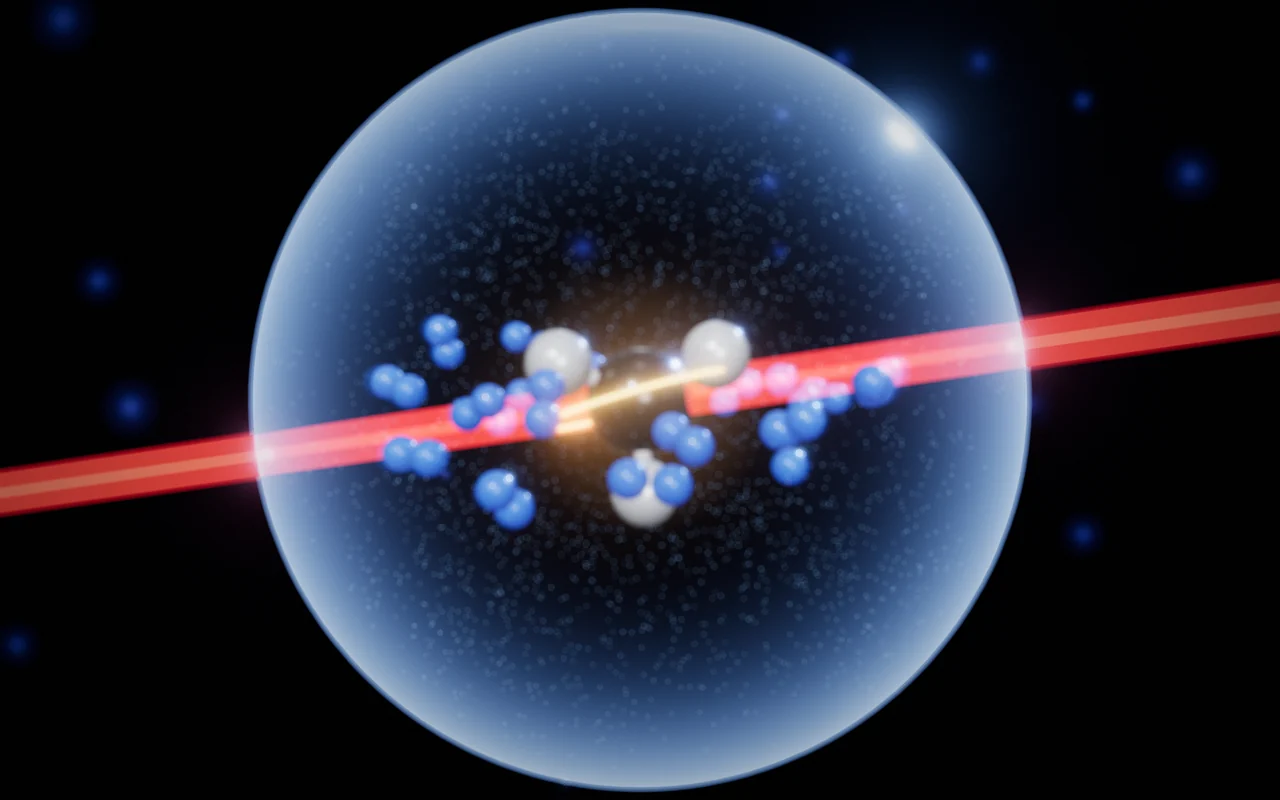
Image: Virtual Lab (3D illustration)
Superfluidity is a quantum state in which a liquid flows with no friction at all. It was discovered in liquid helium in 1936; such helium flows unhindered even through the narrowest channels. In 1972 Nobel laureate Vitaly Ginzburg predicted that liquid hydrogen could do the same.
The catch is that hydrogen would need to be cooled to 1–2 kelvin to become superfluid, but it freezes at 13.8 kelvin. Takamasa Momose of the University of British Columbia and Susumu Kuma of RIKEN worked on the problem for nearly 20 years.
They placed small clusters of hydrogen molecules inside ultracold helium nanodroplets, where hydrogen can stay liquid without freezing. A single methane molecule was embedded in the cluster and set spinning with a laser. If the surrounding hydrogen is superfluid, the methane spins without resistance.
Once the cluster held 15 to 20 hydrogen molecules, the methane did spin freely, showing that the hydrogen was behaving as a superfluid. Calculations by theorists at Kanazawa University matched the experiment perfectly.
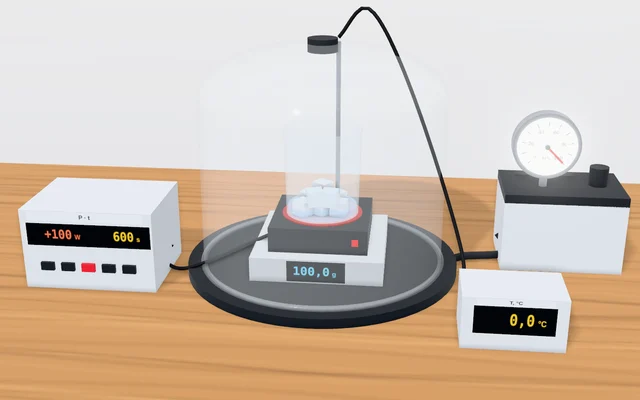 Try it in the labMelting and boiling3D lab on this site →Share on Telegram
Sources: Physics World · UBC