Quipu: the largest structure in the nearby universe
The study, led by Hans Böhringer of the Max Planck Institute, was announced in February 2025 and published in Astronomy & Astrophysics.
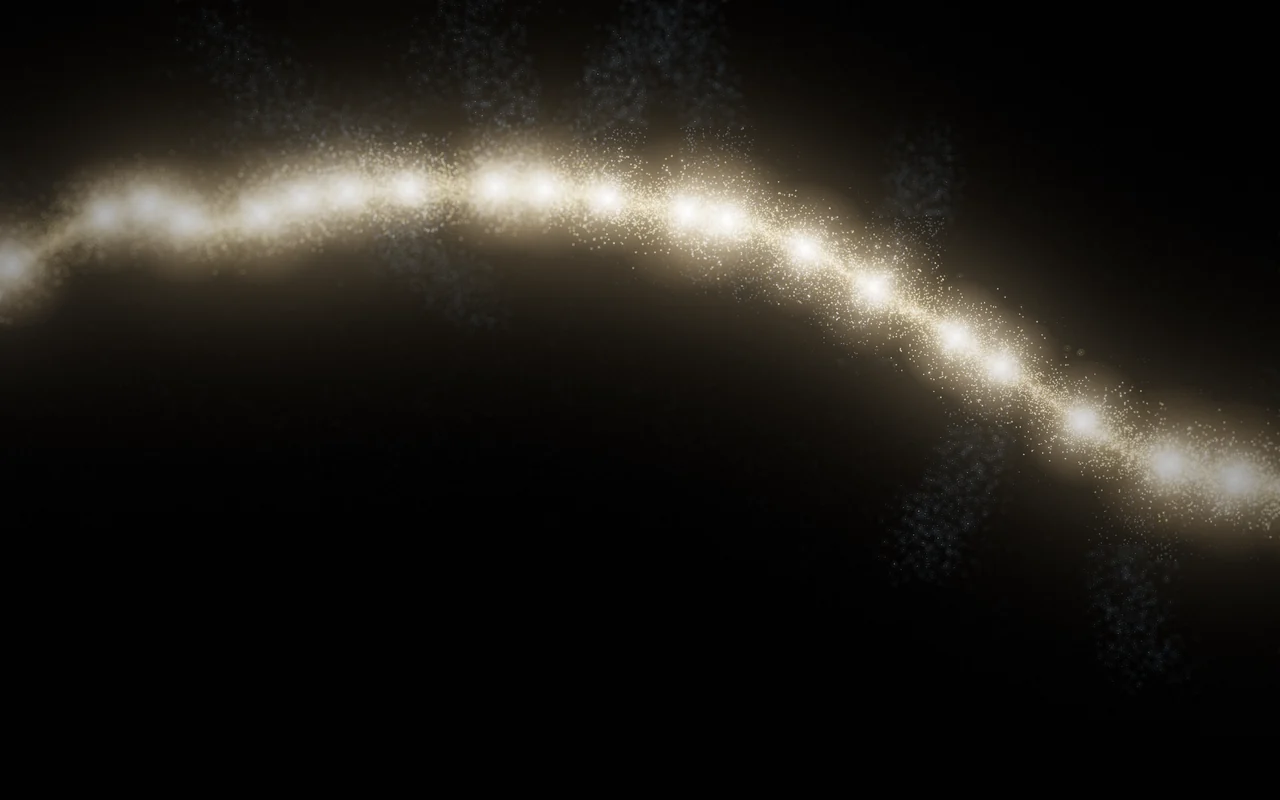
Image: Virtual Lab (3D illustration)
Galaxies are not scattered randomly. They gather into clusters, which link into long filaments and walls, forming a vast 'cosmic web'. Its largest parts are called superclusters — giant groupings of galaxy clusters.
Böhringer's team used data from the ROSAT X-ray satellite. The very hot gas inside galaxy clusters glows in X-rays, so clusters stand out like beacons on an X-ray sky map. Measuring their distances through redshift, the team built a 3D map of a shell 425–800 million light years from Earth.
Five giant structures stood out, and the largest was Quipu: a filament 1.3 billion light years long — 13,000 times the length of the Milky Way — containing 68 galaxy clusters and many smaller side branches.
It is named after the quipu, the knotted-cord recording device of Andean peoples, which Böhringer had seen in a museum in Chile. The Hercules–Corona Borealis Great Wall might be even longer, but it has not been confirmed as a single connected structure.
 Try it in the labThe eye and optical instruments3D lab on this site →Share on Telegram
Sources: EarthSky · Smithsonian