Fibre that guides light through air: a 45% faster internet
Francesco Poletti's team published the result in Nature Photonics on 1 September 2025.
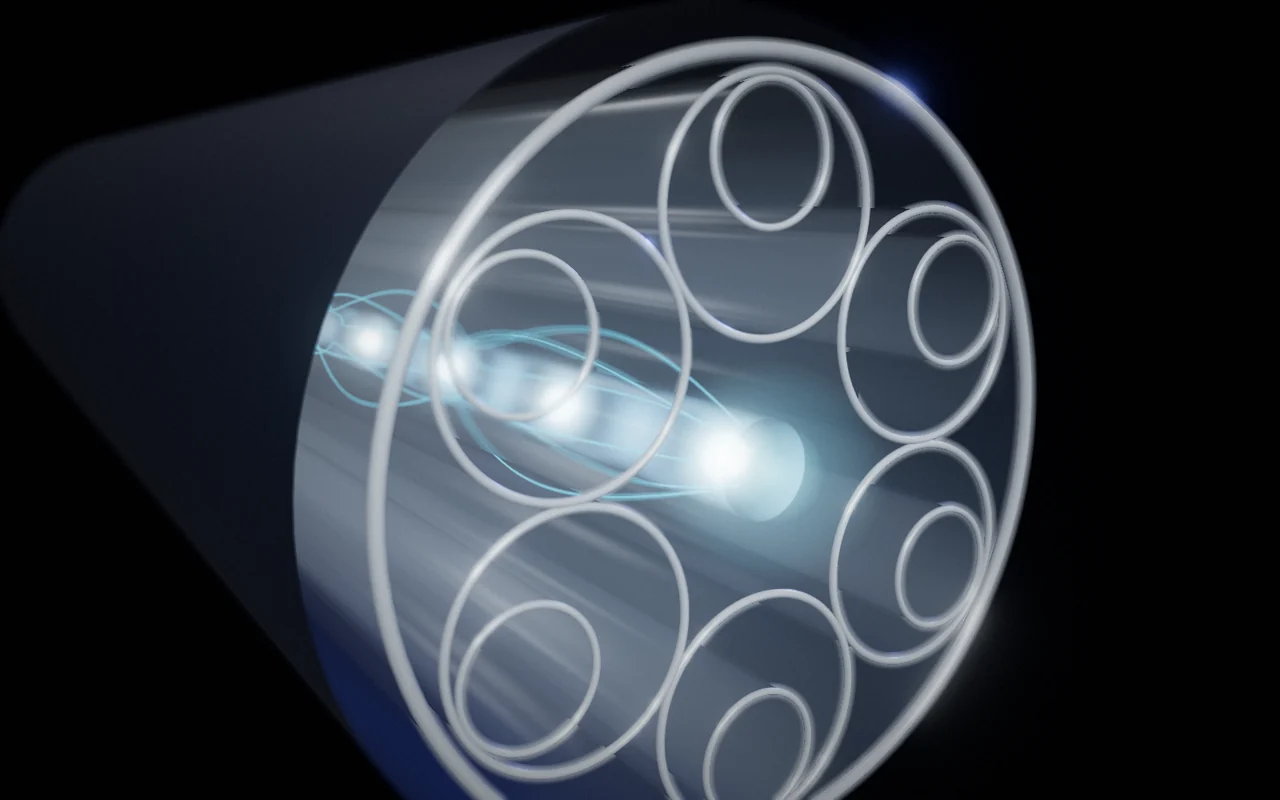
Image: Virtual Lab (3D illustration)
Internet data travels the world as light in optical fibres — glass threads as thin as a hair. In glass, light moves about 1.5 times slower than in vacuum, around 200,000 km/s. It also fades: half is lost every 20 km or so, so amplifiers are placed along the way.
The best glass fibres lose about 0.14 decibels per kilometre, a figure that has barely improved since the 1980s. The idea of hollow-core fibre is simple: let light travel through an air-filled channel instead of glass. But earlier versions couldn't hold the light well.
In the new fibre, micron-thin glass tubes nested inside one another surround the central air channel. Acting like mirrors, they bounce light back to the centre. Loss fell to 0.091 decibels per kilometre — a record for any optical fibre — and stays low across a broad 66-terahertz band.
In air, light travels almost as fast as in vacuum, close to 300,000 km/s, so data arrives 45% sooner. Microsoft has already laid such fibre in parts of its network and is sending live traffic through it.
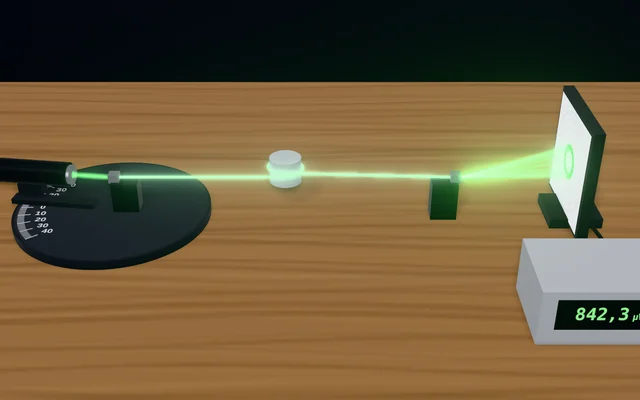 Try it in the labOptical fibre3D lab on this site →Share on Telegram
Sources: Tom's Hardware · TechSpot