The year's best meteor shower: the Geminids on 13–14 December
The Geminids are active from 4 to 20 December, peaking on the night of 13–14 December.
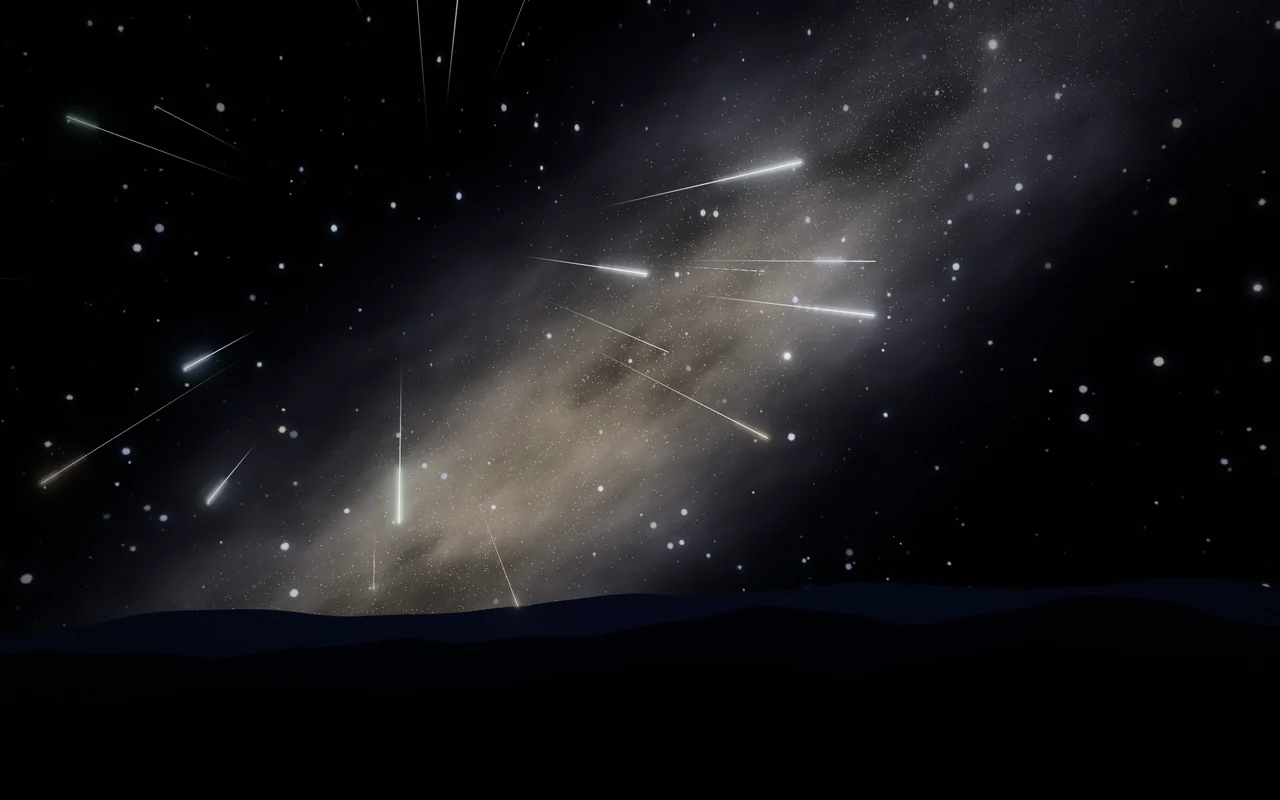
Image: Virtual Lab (3D illustration)
Shooting stars are not stars at all. They are bits of space dust from grains of sand to peas that hit Earth's atmosphere at about 35 kilometres per second, heat up through friction with the air and burn away. The glowing trail is called a meteor.
The Geminids come from asteroid 3200 Phaethon, which leaves a trail of dust along its orbit around the Sun. Every December Earth passes through that trail. The meteors seem to burst out of the constellation Gemini, hence the name.
In 2026 the peak is expected on the night of 13–14 December. From Uzbekistan the best window is the two nights from the evening of 13 December to the morning of 15 December. The Moon will be a thin crescent that sets early, leaving the sky dark. Under ideal skies you could see 120–150 meteors an hour.
How to watch: find a dark spot away from city lights. No telescope or binoculars are needed, just your eyes. Your eyes take 20–30 minutes to adapt to the dark, so avoid looking at your phone. Dress warmly and take in a wide stretch of sky; Gemini climbs high towards midnight.
 Try it in the labFree fall3D lab on this site →Share on Telegram