Home › Nobel Prize laureates › 2016–2026 › 2018
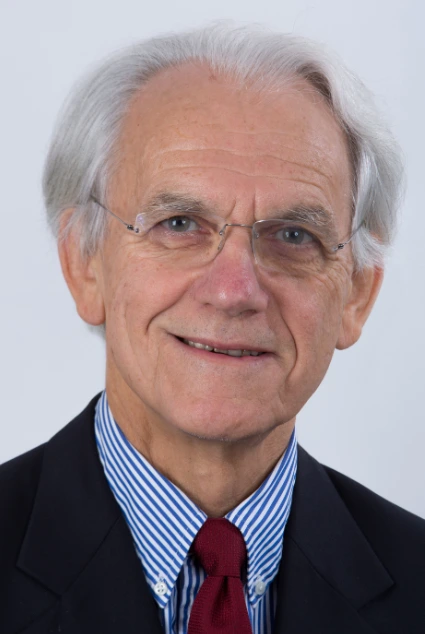
Gérard Mourou
born 1944 · France
Prize motivation“for their method of generating high-intensity, ultra-short optical pulses”
Shared the prize with: Arthur Ashkin, Donna Strickland
The discovery
Trying to amplify a short laser pulse strongly would destroy the amplifying material, so for years laser power had stopped growing.
In 1985 Gérard Mourou and Donna Strickland found a simple but ingenious way out. First the pulse was “stretched” in time by sending its different colours along different paths with a grating, lowering its power so it could be safely amplified. Then it was “squeezed” back into a very short, very powerful flash.
The method, called “chirped pulse amplification”, made ultra-intense laser flashes possible even in small laboratories.
Life
Born in 1944 in Albertville, France, he earned his doctorate at Pierre and Marie Curie University in Paris in 1973.
He worked at the universities of Rochester and Michigan in the USA and was a professor at the École Polytechnique in France, launching major international projects on ultra-intense lasers.
Where it is used today
Lasers made this way are used in vision-correcting surgery (LASIK) to cut the cornea precisely; millions of people have such operations every year.
They are also used for ultra-precise cutting of metal and glass, in research and in new ways of accelerating particles.
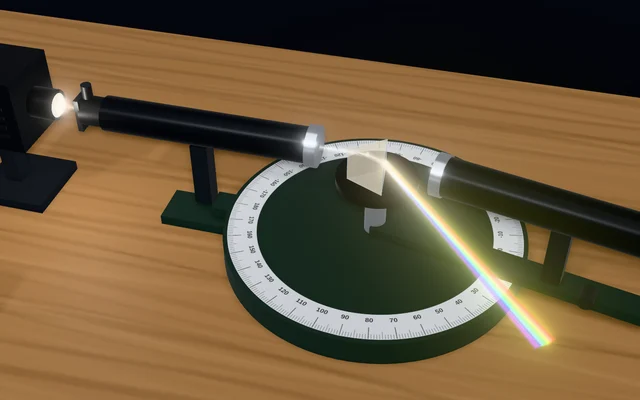 Try it in the labPrism and dispersion3D lab on this site →Share on Telegram
Sources: NobelPrize.org — 2018