Home › Nobel Prize laureates › 2016–2026 › 2018
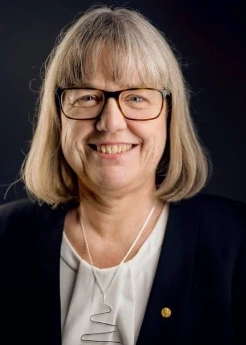
Donna Strickland
born 1959 · Canada
Prize motivation“for their method of generating high-intensity, ultra-short optical pulses”
Shared the prize with: Arthur Ashkin, Gérard Mourou
The discovery
Trying to amplify a short laser pulse strongly would destroy the amplifying material, so for years laser power had stopped growing.
In 1985 Gérard Mourou and Donna Strickland found a simple but ingenious way out. First the pulse was “stretched” in time by sending its different colours along different paths with a grating, lowering its power so it could be safely amplified. Then it was “squeezed” back into a very short, very powerful flash.
The method, called “chirped pulse amplification”, made ultra-intense laser flashes possible even in small laboratories.
Life
Born in 1959 in Guelph, Canada, she studied at McMaster University and earned her doctorate at the University of Rochester, USA, in 1989.
She is now a professor at the University of Waterloo, Canada, where she leads an ultrafast laser research group.
Where it is used today
Lasers made this way are used in vision-correcting surgery (LASIK) to cut the cornea precisely; millions of people have such operations every year.
They are also used for ultra-precise cutting of metal and glass, in research and in new ways of accelerating particles.
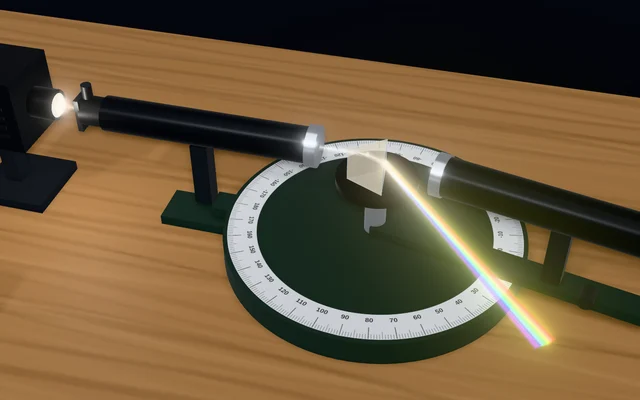 Try it in the labPrism and dispersion3D lab on this site →Share on Telegram
Sources: NobelPrize.org — 2018