First picture of two planets around a Sun-like star
The results were published on 22 July 2020 in The Astrophysical Journal Letters. The star lies about 300 light years away in the constellation Musca.
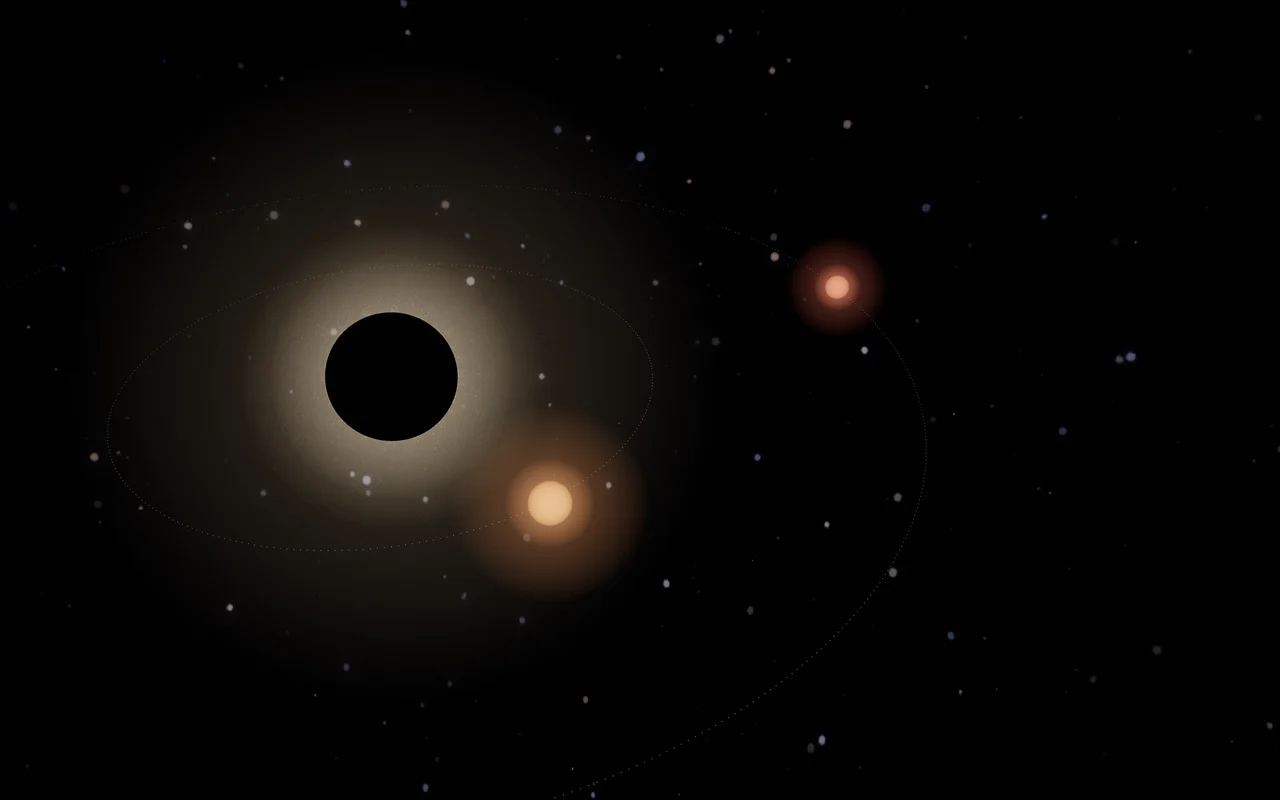
Image: Virtual Lab (3D illustration)
Most exoplanets are found indirectly — by the slight dimming of a star as a planet passes in front of it, or by the star's wobble. Photographing a planet directly is very hard because it is millions of times fainter than its star and lost in the glare.
The SPHERE instrument on the Very Large Telescope uses a coronagraph, a small mask that blocks the starlight, while a special mirror corrects the image for air turbulence more than a thousand times a second.
TYC 8998-760-1 is just 17 million years old, so its planets are still young and hot and glow on their own in infrared light. The inner planet is 14 times as massive as Jupiter, the outer one 6 times; they orbit 160 and 320 astronomical units from the star.
In our solar system Jupiter is 5 and Saturn 10 astronomical units from the Sun, so these planets are tens of times farther out. Lead author Alexander Bohn, a PhD student at Leiden University, calls it a snapshot of a system very similar to our own, but at a much earlier stage.
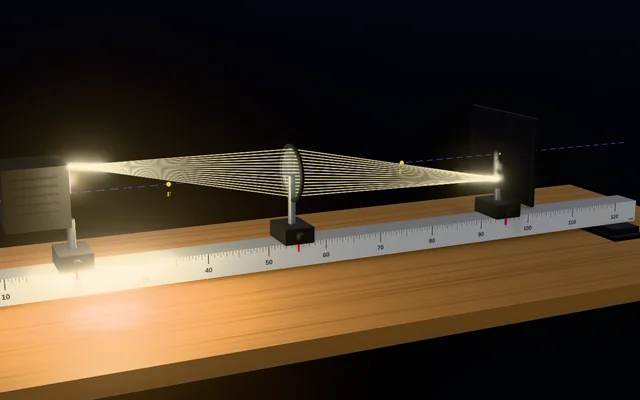 Try it in the labLenses and mirrors3D lab on this site →Share on Telegram
Sources: Astronomy · Universe Today