The upper limit to the speed of sound is calculated
The study was published on 9 October 2020 in Science Advances by researchers from London, Cambridge and Troitsk, Russia.
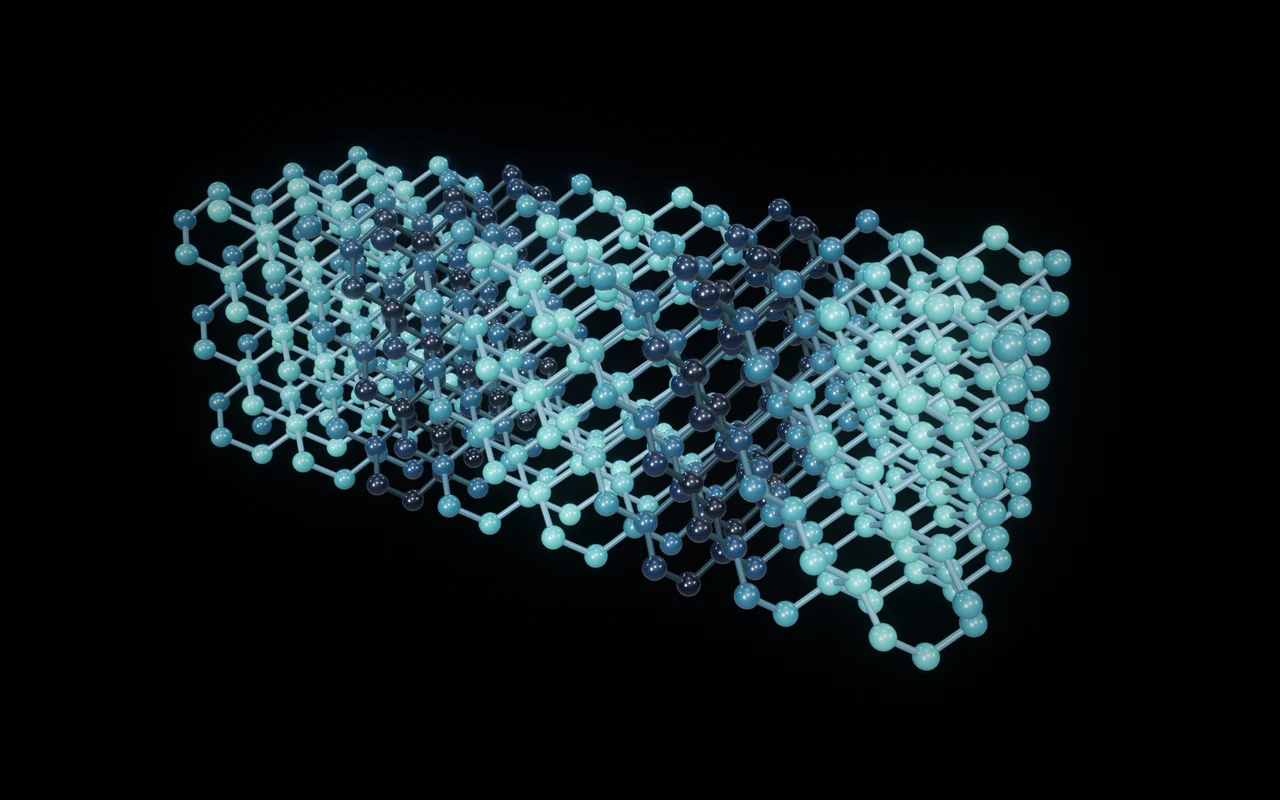
Image: Virtual Lab (3D illustration)
The speed of light, about 300,000 km/s, is the universe's ultimate speed limit, but whether sound has one was unknown. Sound travels at 343 m/s in air, 1.5 km/s in water and about 6 km/s in steel.
Sound is vibration passed from atom to atom. The lighter the atoms and the stiffer the bonds between them, the faster it travels — which is why you hear an approaching train sooner by putting your ear to the rail.
Kostya Trachenko's team showed that bond stiffness and atomic mass are capped by natural constants: the fine-structure constant (the strength of electric forces) and the ratio of the proton's mass to the electron's. Together they give an upper limit for the speed of sound of about 36 km/s.
The team checked dozens of materials and none exceeded the limit; even diamond, the fastest, reaches only half of it. Calculations suggest the closest is atomic hydrogen squeezed into a metal under enormous pressure.
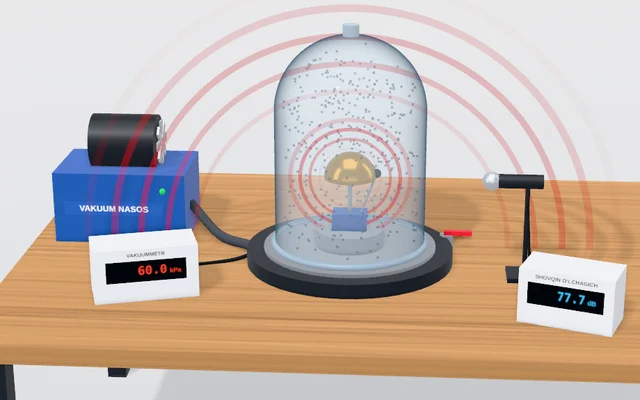 Try it in the labSound waves3D lab on this site →Share on Telegram
Sources: Science Advances (DOI) · Queen Mary University of London