The shortest time ever measured: 247 zeptoseconds
The study was published on 16 October 2020 in Science, led by Reinhard Dörner of Goethe University Frankfurt.
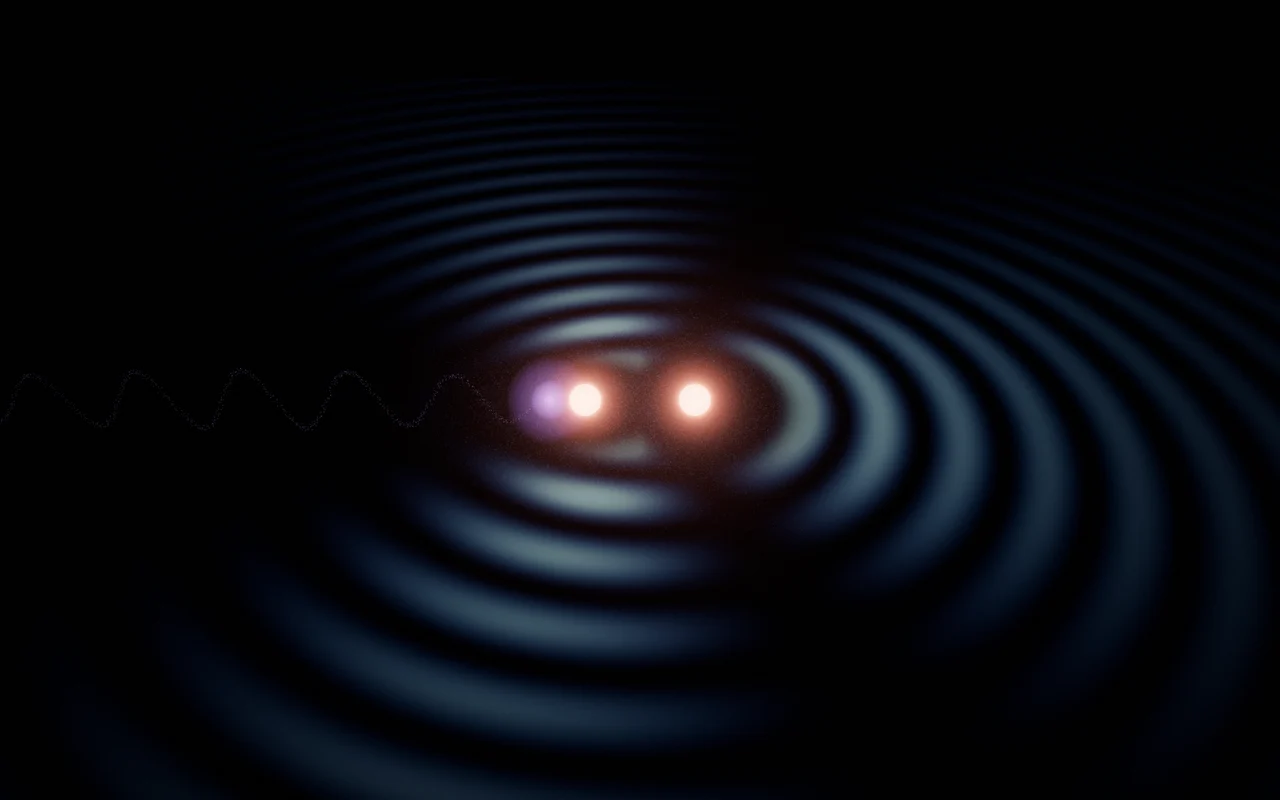
Image: Virtual Lab (3D illustration)
In 1999 Ahmed Zewail won a Nobel Prize for timing how molecules change shape in femtoseconds — millionths of a billionth of a second, the timescale on which chemical bonds break and form. A zeptosecond is a million times shorter still.
The experiment used X-rays from the PETRA III accelerator at DESY in Hamburg, tuned so that a single photon knocked both electrons out of a hydrogen molecule — a form of the photoelectric effect.
Electrons behave as both particles and waves. The photon reaches the molecule's two atoms one after the other, so the electron wave from the second leaves slightly later. The two waves combine into an interference pattern whose shift reveals the delay.
A special 'reaction microscope' called COLTRIMS recorded the pattern. The delay depended on the molecule's orientation to the light and reached up to 247 zeptoseconds, showing that information within the molecule travels at the speed of light.
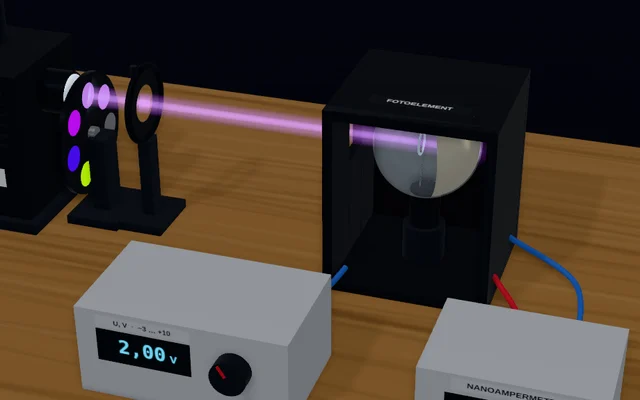 Try it in the labPhotoelectric effect3D lab on this site →Share on Telegram
Sources: Science (DOI) · Goethe University Frankfurt