Antimatter cooled with laser light for the first time
The result was published in Nature on 31 March 2021 and made the cover.
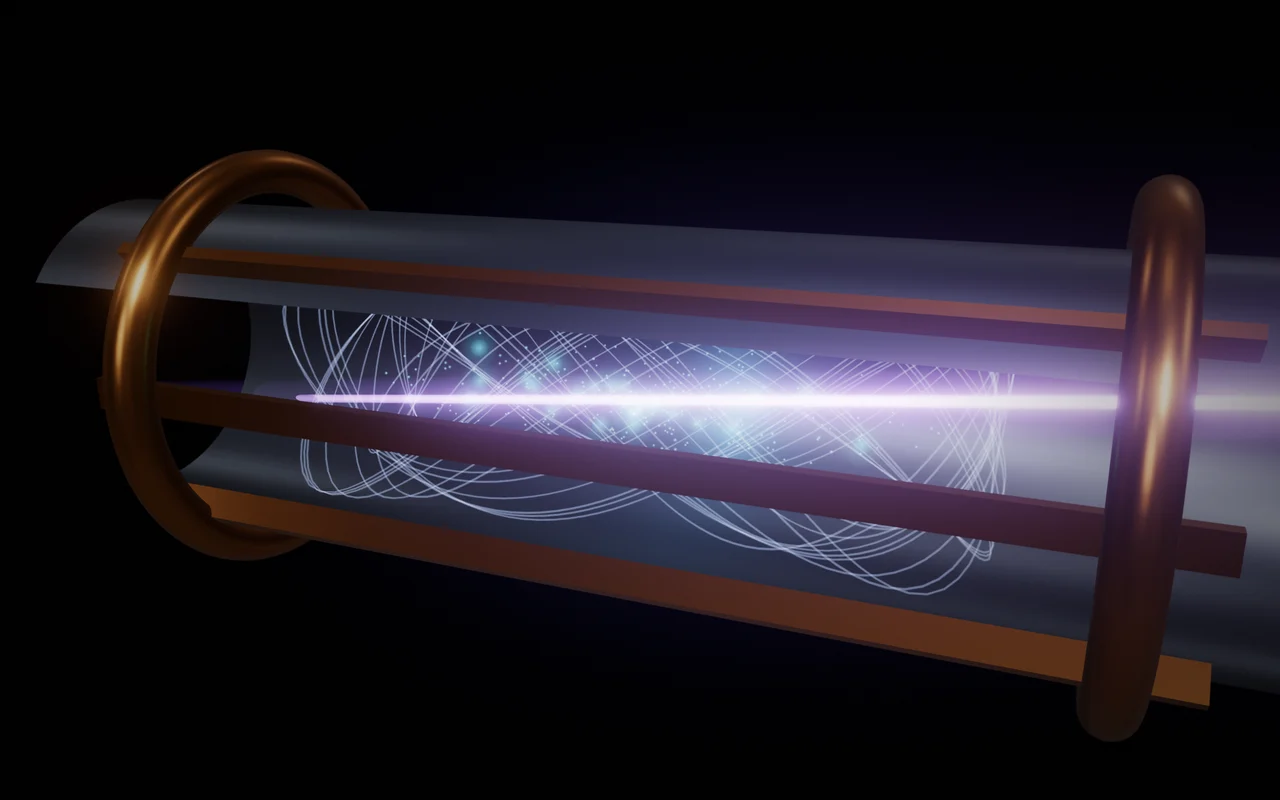
Image: Virtual Lab (3D illustration)
Antihydrogen is the simplest anti-atom: an antiproton with a positron around it. If it meets ordinary matter, both vanish into energy, so anti-atoms are held in a strong magnetic trap away from the walls.
ALPHA takes antiprotons from CERN's Antiproton Decelerator and positrons from radioactive sodium-22, combining them into antihydrogen. But the resulting anti-atoms race around the trap too fast for precise measurements.
Laser cooling relies on the Doppler effect: the laser is tuned so that only atoms moving towards the beam absorb its light. Each absorbed photon gives the atom a small push backwards, slowing it. For antihydrogen, a special ultraviolet laser at 121.6 nanometres was built.
The anti-atoms' energy of motion fell more than tenfold and their spectral line narrowed markedly. 'About a decade ago, laser cooling of antimatter was in the realm of science fiction,' said ALPHA spokesperson Jeffrey Hangst. The technique paved the way for the 2023 experiment showing that antimatter falls down too.
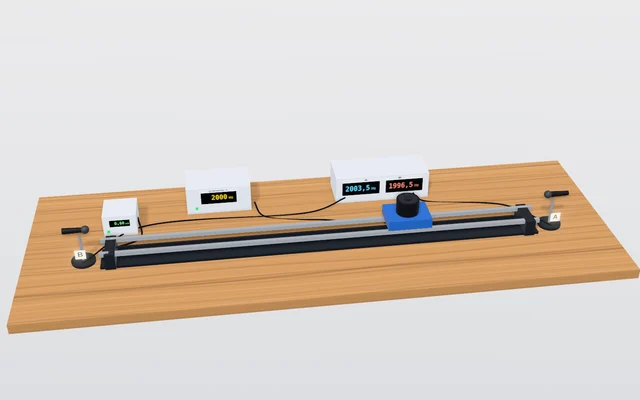 Try it in the labThe Doppler effect3D lab on this site →Share on Telegram