Cubic boron arsenide: a semiconductor that could outperform silicon
Both papers appeared in Science on 21–22 July 2022, with researchers from MIT, the University of Houston and the Chinese Academy of Sciences.
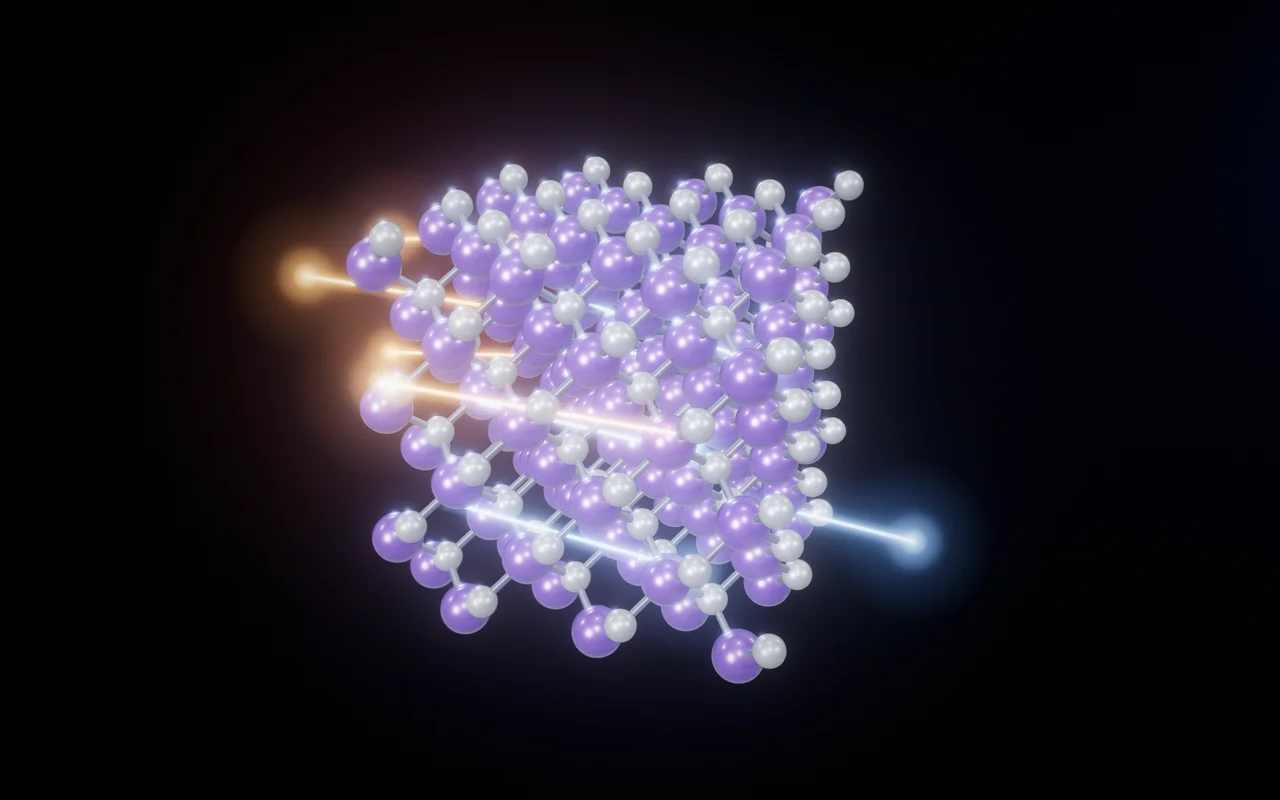
Image: Virtual Lab (3D illustration)
Almost every computer, phone and solar panel is made of silicon, which has two weaknesses. Electrons move well in it, but positive charge carriers — 'holes' — move slowly. And it conducts heat poorly, so chips get hot and cooling them costs a lot of energy.
Cubic boron arsenide (BAs) is made of boron and arsenic atoms in a diamond-like crystal lattice. In 2018 it was found to conduct heat extremely well — about 1,300 W/(m·K), nearly 10 times more than silicon — beaten only by diamond and a special form of boron nitride.
In the new experiments, researchers found uniform, pure regions of the crystal and probed them with laser pulses, watching how quickly charges spread out. Both electrons and holes showed mobilities of about 1,500–1,600 cm²/(V·s); in silicon, holes are three times slower.
So far boron arsenide is made only in the lab, in small, non-uniform crystals. Producing it cheaply at scale is the next challenge, and replacing silicon would mean rebuilding a whole industry. Still, it could find uses soon where heat is the critical problem.
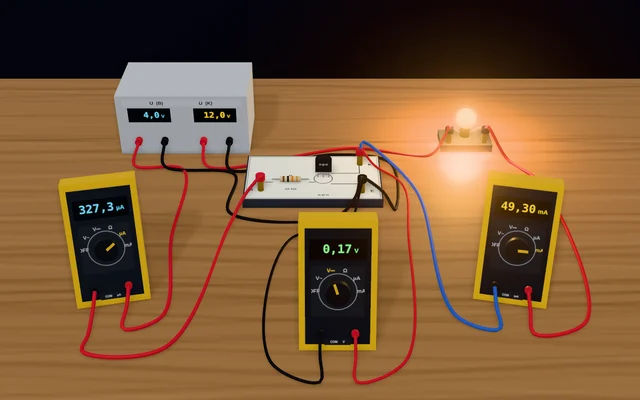 Try it in the labThe transistor3D lab on this site →Share on Telegram
Sources: MIT News / ScienceDaily · University of Houston