Antimatter falls down too: gravity's pull on antihydrogen measured
The ALPHA collaboration published the result in Nature on 27 September 2023.
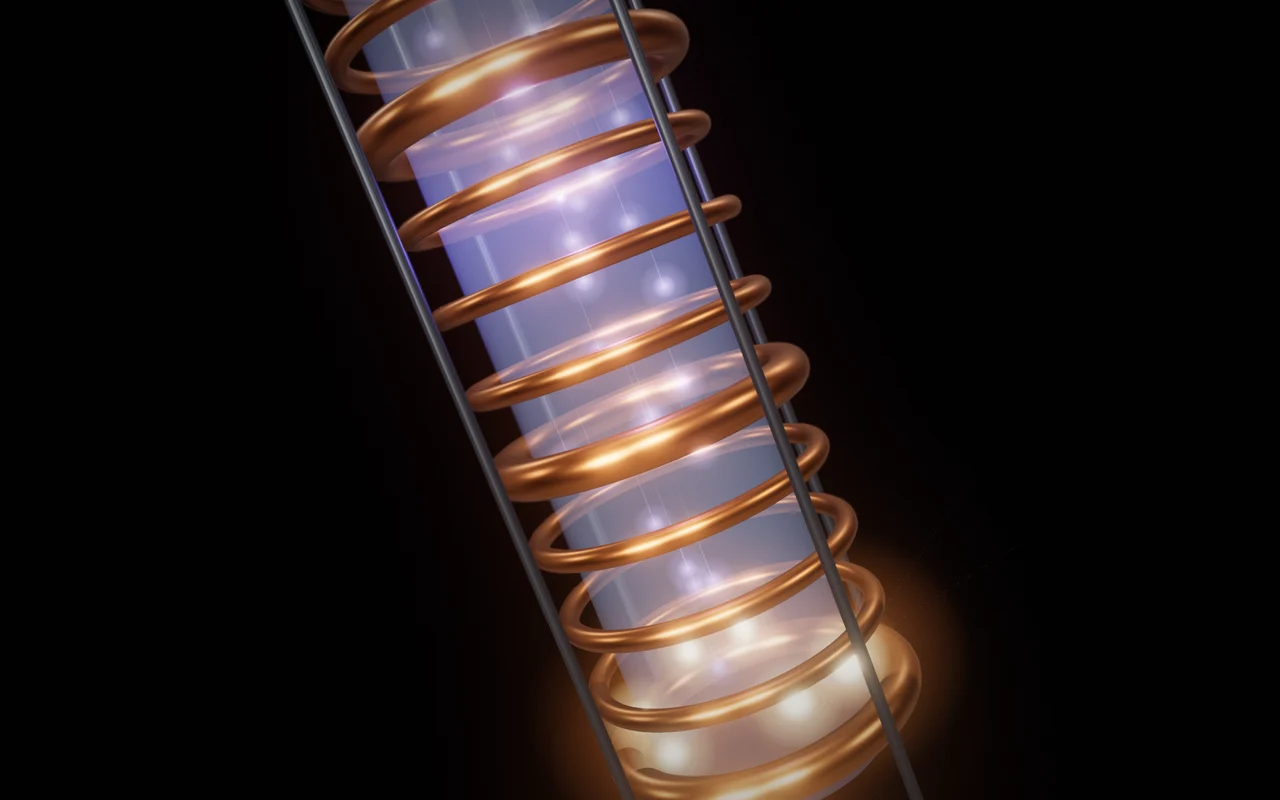
Image: Virtual Lab (3D illustration)
Antimatter is ordinary matter's mirror image: its particles have the same mass but opposite charge. An antihydrogen atom is an antiproton plus a positron. When matter and antimatter meet they annihilate into energy, which makes antimatter extremely hard to store and study.
Einstein's general relativity says gravity acts on everything the same way, and most physicists expected antimatter to fall down. But this had never been measured directly, and some ideas suggested antimatter might be repelled by gravity.
ALPHA-g is a vertical apparatus several metres tall. The team trapped antihydrogen atoms in a very cold magnetic 'bottle', then slowly weakened the field to release them. As atoms hit the trap wall and annihilated, detectors recorded whether they escaped from the top or the bottom.
Over many repeated runs, most atoms escaped downwards — gravity pulls them down just as it does ordinary hydrogen. The measured acceleration was about 0.75 g, consistent within the uncertainties with free fall on Earth.
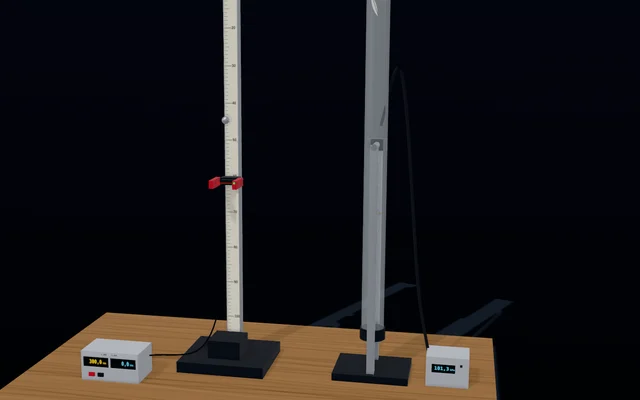 Try it in the labFree fall3D lab on this site →Share on Telegram
Sources: UBC Science · UC Berkeley