2023 Nobel Prize: attosecond flashes that opened the world of electrons
The Royal Swedish Academy of Sciences announced the prize on 3 October 2023, 'for experimental methods that generate attosecond pulses of light for the study of electron dynamics in matter'.
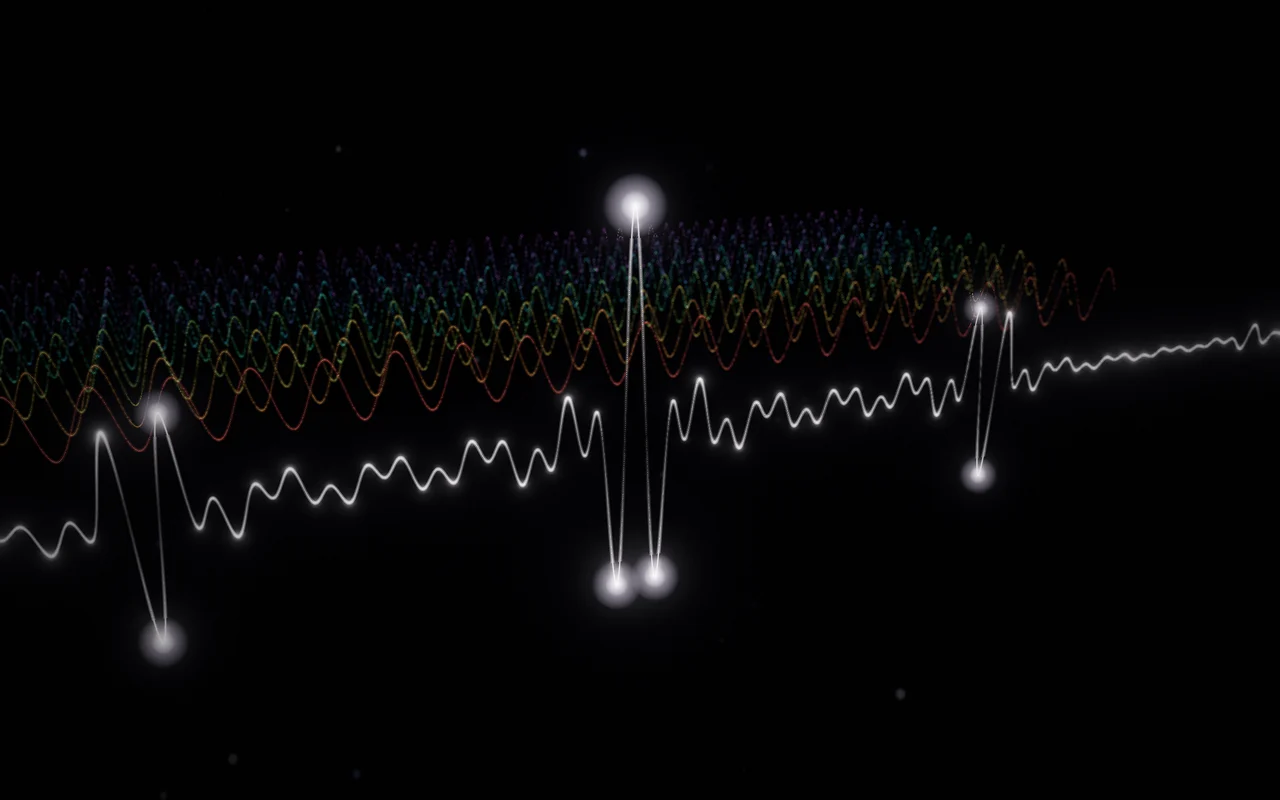
Image: Virtual Lab (3D illustration)
A film is made of separate frames, yet our eyes see smooth motion. To catch a very fast process you need an even shorter 'frame'. Electrons inside atoms move and change energy within attoseconds; one attosecond is 10⁻¹⁸ seconds. There are about as many attoseconds in a second as seconds since the universe began.
In 1987 Anne L'Huillier found that infrared laser light passing through a noble gas produced many 'overtones' — higher harmonics at multiples of the original frequency. Gas atoms lose an electron in the laser field, and when it returns, the extra energy comes out as light.
When many harmonics add together, as in a Fourier series, they form very short pulses. In 2001 Pierre Agostini produced and measured a train of pulses each lasting 250 attoseconds, and the same year Ferenc Krausz isolated a single pulse lasting 650 attoseconds.
Anne L'Huillier became only the fifth woman to win the Nobel Prize in Physics. 'We can now open the door to the world of electrons,' said Eva Olsson, chair of the Nobel Committee for Physics. 'Attosecond physics gives us the opportunity to understand mechanisms that are governed by electrons.'
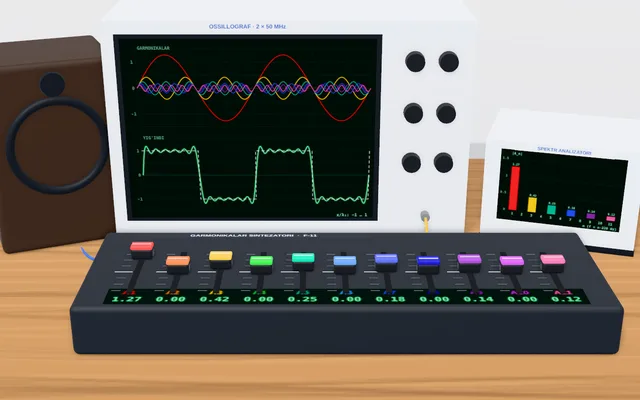 Try it in the labFourier series3D lab on this site →Share on Telegram
Sources: Lindau Nobel · Physics Today