Rubin Observatory starts filming the greatest movie of the Universe
On 30 June the Legacy Survey of Space and Time (LSST) officially began.
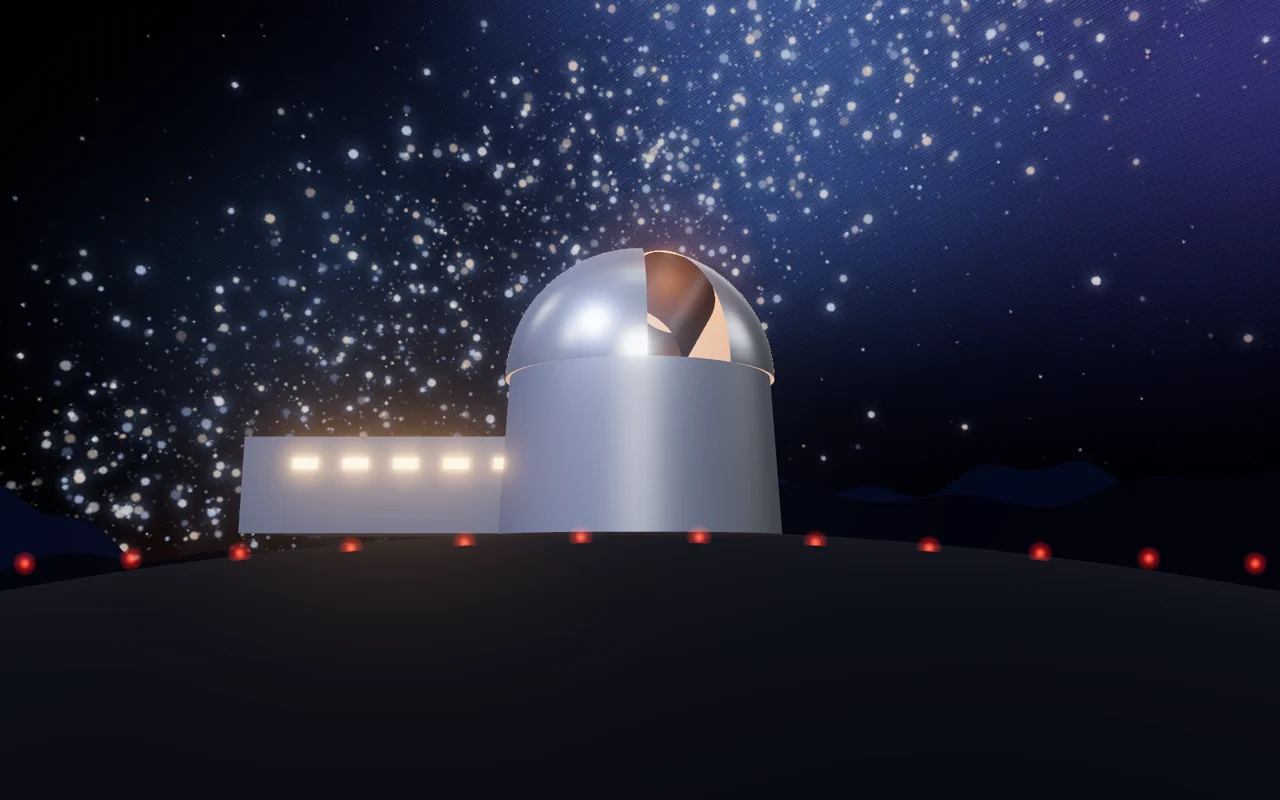
Image: Virtual Lab (3D illustration)
The observatory sits on Cerro Pachón in Chile, more than 2.6 kilometres above sea level, where dry air and very dark skies make one of the best observing sites on Earth. Its telescope mirror is 8.4 metres across and its camera has 3,200 megapixels: the world's largest digital camera, weighing about 3 tonnes.
Every 40 seconds the telescope photographs a wide patch of sky, each frame covering the area of 45 full Moons, and 10–20 terabytes of data pile up every night. Computers compare each new image with earlier ones and, whenever something changes (a new star flares up, an asteroid moves), send out millions of alerts per night.
Over 10 years the telescope will image every point of the southern sky about 800 times. The expected haul is about 20 billion galaxies, 17 billion stars, 10 million supernovae and 6 million Solar System objects, a time-lapse movie of the changing Universe.
The observatory is named after American astronomer Vera Rubin, who found the first convincing evidence for dark matter. Its first images were released in June 2025, and all its systems were tested over the following year.
 Try it in the labThe eye and optical instruments3D lab on this site →Share on Telegram
Sources: Astronomy.com · Rubin Observatory