Home › Nobel Prize laureates › 1996–2005 › 2004
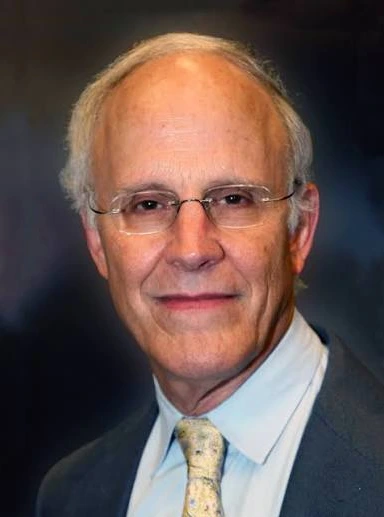
David J. Gross
born 1941 · USA
Prize motivation“for the discovery of asymptotic freedom in the theory of the strong interaction”
Shared the prize with: H. David Politzer, Frank Wilczek
The discovery
Protons and neutrons are made of quarks, held together by the strong interaction, whose carriers are particles called gluons. The strong force has a strange property: nobody has ever seen a single free quark.
In 1973 at Princeton University, 31-year-old David Gross and his 21-year-old doctoral student Frank Wilczek, and independently 23-year-old Harvard doctoral student David Politzer, did the calculation. It showed that when quarks are very close together the force between them weakens and they move almost freely, which is called asymptotic freedom.
As quarks move apart the force grows, like a stretched rubber band or spring. Try to pull a quark out, and the energy turns into a new quark–antiquark pair, which is why quarks always stay in groups.
The discovery explained why, in experiments firing fast electrons at protons, the particles inside looked almost free. It became the foundation of the theory of the strong interaction, quantum chromodynamics.
Life
Born on 19 February 1941 in Washington, DC, USA, he spent his teenage years in Jerusalem, graduated from the Hebrew University of Jerusalem in 1962 and earned his doctorate at the University of California, Berkeley, in 1966.
He worked at Harvard, was a professor at Princeton from 1969 to 1997, and directed the Kavli Institute for Theoretical Physics in Santa Barbara from 1997 to 2012.
Where it is used today
Every collider calculation, including the discovery of the Higgs boson, relies on quantum chromodynamics; without it, nobody could predict what happens when protons collide.
The theory showed that most of a proton's mass comes not from the quarks' own mass but from the energy of the moving quarks and gluons (E = mc²), and it is used to study the quark–gluon plasma of the first moments after the Big Bang.
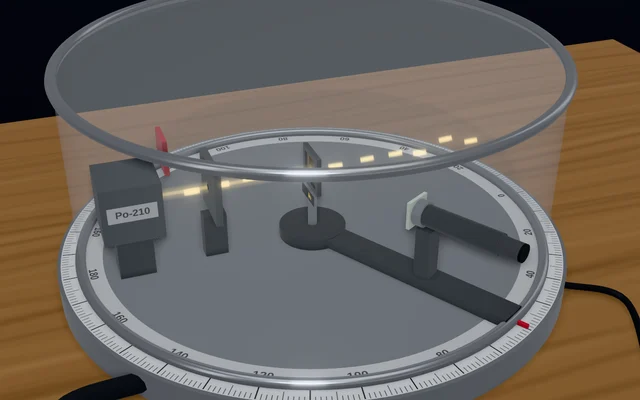 Try it in the labRutherford scattering3D lab on this site →Share on Telegram
Sources: NobelPrize.org — 2004