Home › Nobel Prize laureates › 2006–2015 › 2007
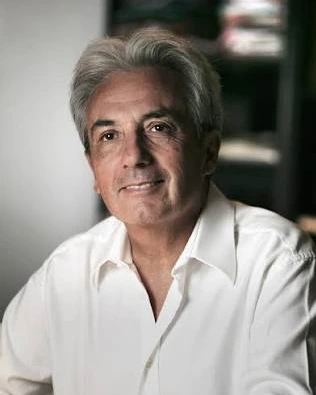
Albert Fert
born 1938 · France
Prize motivation“for the discovery of Giant Magnetoresistance”
Shared the prize with: Peter Grünberg
The discovery
Magnetoresistance is the change in a material's electrical resistance in a magnetic field, and in ordinary metals it is no more than a few per cent.
In 1988 two groups independently got an unexpected result. Albert Fert in Orsay near Paris stacked alternating layers of iron and chromium just a few atoms thick, while Peter Grünberg in Jülich, Germany, made an iron–chromium–iron sandwich. In both, a weak magnetic field changed the resistance sharply, by up to 50% in Fert's sample.
The reason lies in the electron's spin, which makes it a tiny magnet. If neighbouring magnetic layers point the same way, electrons pass easily; if they point opposite ways, electrons scatter and resistance rises. An outside field turns the layers into line and the resistance drops sharply.
The discovery launched spintronics, a new kind of electronics that uses the electron's spin as well as its charge.
Life
Born on 7 March 1938 in Carcassonne, France, he studied at the École Normale Supérieure in Paris and earned his doctorate at the University of Paris-Sud in 1970.
He has been a professor at Paris-Sud since 1976 and, since 1995, scientific director of a joint laboratory of the French National Centre for Scientific Research (CNRS) and the company Thales.
Where it is used today
Since 1997 hard-disk read heads have used this effect. It became possible to read very small magnetic regions, and disk capacity grew rapidly, making laptops, music players and data centres smaller and more capacious.
Spintronic magnetic sensors are used in cars, for example to measure wheel rotation, and MRAM memory, which keeps data even without power, grew out of the same idea.
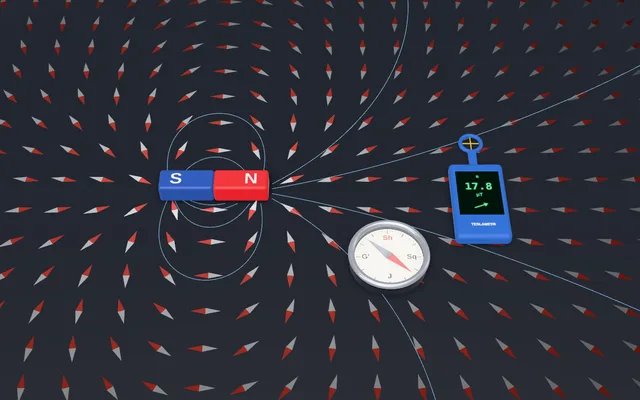 Try it in the labMagnetic field3D lab on this site →Share on Telegram
Sources: NobelPrize.org — 2007