Home › Nobel Prize laureates › 2006–2015 › 2008
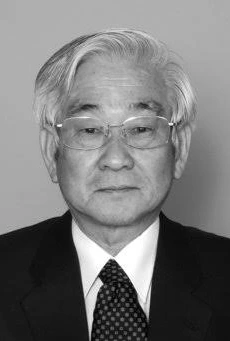
Toshihide Maskawa
1940–2021 · Japan
Prize motivation“for the discovery of the origin of the broken symmetry which predicts the existence of at least three families of quarks in nature”
Shared the prize with: Yoichiro Nambu, Makoto Kobayashi
The discovery
The Big Bang should have produced equal amounts of matter and antimatter, which destroy each other when they meet, leaving an empty universe. Yet we live in a world made of matter, so nature must treat matter and antimatter slightly differently. This difference is called CP violation, and it was first seen in particles called K mesons in 1964.
In 1972 two young scientists at Kyoto University, Makoto Kobayashi and Toshihide Maskawa, explained it within the theory of particles, on one condition: nature must have at least three “generations” of quarks, six in all. At the time only three quarks were known.
The prediction came true step by step: the fourth quark was found in 1974, the fifth in 1977 and the sixth in 1995. In 2001 the Belle experiment in Japan and BaBar in the USA measured symmetry breaking in B mesons precisely, and the result matched the theory perfectly.
Still, this effect is not enough to explain fully why the universe holds more matter than antimatter, and that mystery remains unsolved.
Life
Born on 7 February 1940 in Nagoya, Japan, he studied at Nagoya University and earned his doctorate in 1967.
He worked at Kyoto University, heading its Yukawa Institute for Theoretical Physics from 1997 to 2003, and later taught at Kyoto Sangyo University. He died in Kyoto on 23 July 2021.
Where it is used today
Kobayashi and Maskawa's paper is one of the most cited in particle physics. It gave rise to the table of probabilities for one type of quark turning into another, which is used in every collider experiment today.
Experiments such as LHCb at CERN are measuring the difference between matter and antimatter ever more precisely, hunting for new physics beyond the Standard Model.
Sources: NobelPrize.org — 2008