Home › Nobel Prize laureates › 2006–2015 › 2011

Adam G. Riess
born 1969 · USA
Prize motivation“for the discovery of the accelerating expansion of the Universe through observations of distant supernovae”
Shared the prize with: Saul Perlmutter, Brian P. Schmidt
The discovery
In 1929 Edwin Hubble found that the universe is expanding, with galaxies moving away from us. Scientists expected gravity to slow the expansion gradually, and the only question was by how much.
The answer came from type Ia supernovae. Such an explosion happens when a white dwarf pulls matter from a companion star and reaches a certain mass, so all of them are almost equally bright and outshine a whole galaxy for weeks. Their apparent brightness gives the distance, and the redshift in their spectrum gives the speed at which they recede.
Two rival teams took up the challenge: the Supernova Cosmology Project led by Saul Perlmutter, and the High-z team led by Brian Schmidt, in which Adam Riess played a key role. In 1998 both reached the same result: distant supernovae were fainter than expected, so they were farther away, and the expansion of the universe was speeding up.
What drives the acceleration is still unknown. It is called “dark energy”, and it makes up about three quarters of all the energy in the universe.
Life
Born on 16 December 1969 in Washington, DC, USA, he graduated from MIT in 1992 and earned his doctorate at Harvard in 1996.
He worked at the University of California and then the Space Telescope Science Institute in Baltimore, and is now a professor at Johns Hopkins University, measuring the universe's expansion rate with the Hubble telescope.
Where it is used today
The discovery became a cornerstone of today's standard model of cosmology, which puts the age of the universe at about 13.8 billion years. New projects such as the Euclid space telescope and the DESI survey are now trying to pin down the nature of dark energy.
If the acceleration continues, distant galaxies will recede ever faster and eventually disappear from view, so the discovery also changed our picture of the universe's far future.
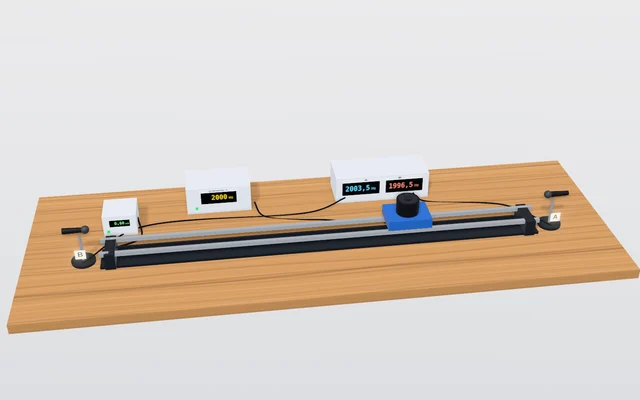 Try it in the labThe Doppler effect3D lab on this site →Share on Telegram
Sources: NobelPrize.org — 2011