Home › Nobel Prize laureates › 2006–2015 › 2012
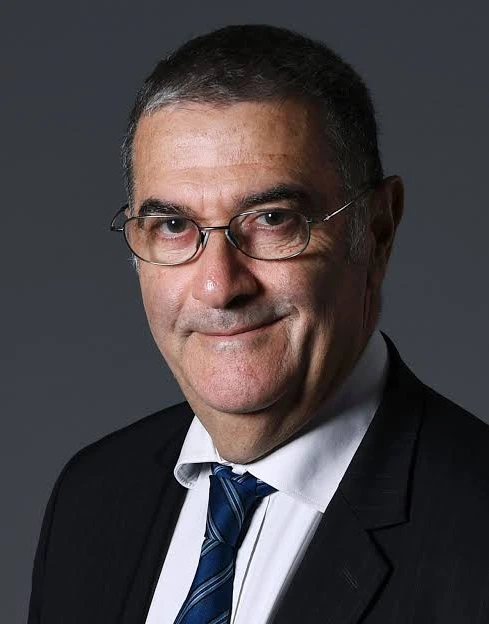
Serge Haroche
born 1944 · France
Prize motivation“for ground-breaking experimental methods that enable measuring and manipulation of individual quantum systems”
Shared the prize with: David J. Wineland
The discovery
In the quantum world a particle can be in several states at once, which is called superposition. But even a slight interaction with its surroundings quickly destroys that state, so for a long time it was thought impossible to watch a single atom or photon without disturbing it.
David Wineland in Boulder, USA, held electrically charged atoms, or ions, in an electric-field trap in a vacuum. He cooled them with lasers to their lowest energy state, then used laser pulses to put them into superposition and measure it.
Serge Haroche in Paris did the opposite: he trapped photons between two superconducting mirrors about 3 cm apart. A photon lived there for up to a tenth of a second, travelling 40,000 km between the mirrors. Sending specially prepared atoms through the box one at a time, Haroche counted the photons without destroying them and watched the quantum state gradually fade.
Both methods made it possible to test the strange laws of quantum mechanics directly, opening the way to quantum computers and ultra-precise clocks.
Life
Born on 11 September 1944 in Casablanca, Morocco, he moved to France with his family in 1956. He studied at the École Normale Supérieure in Paris, earned his doctorate in 1971 and worked at Stanford University, USA, in 1972–73.
He was a professor at the University of Paris and the École Normale Supérieure, held the chair of quantum physics at the Collège de France from 2001 and headed the Collège from 2012 to 2015.
Where it is used today
Trapped ions are now one of the leading kinds of quantum computer, with each ion acting as a qubit. Such computers are needed to model new drugs and materials.
Wineland's group built an optical clock based on a single aluminium ion. Had it been running since the birth of the universe, it would be off by only a few seconds today. Clocks like this are needed for more accurate satellite navigation.
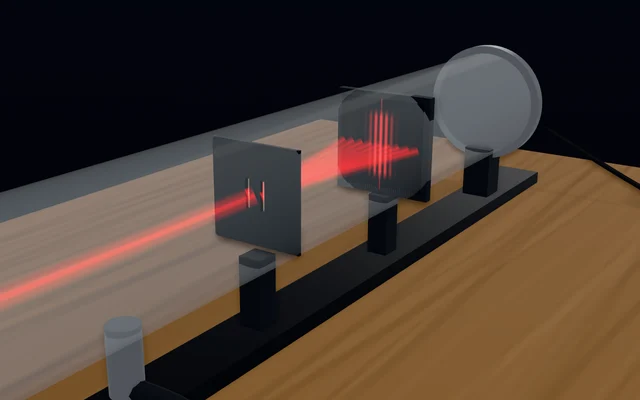 Try it in the labQuantum interference3D lab on this site →Share on Telegram
Sources: NobelPrize.org — 2012