Comet NEOWISE becomes visible to the naked eye
The comet was found on 27 March 2020 by the NEOWISE space telescope. It passed closest to the Sun on 3 July and to Earth on 23 July.
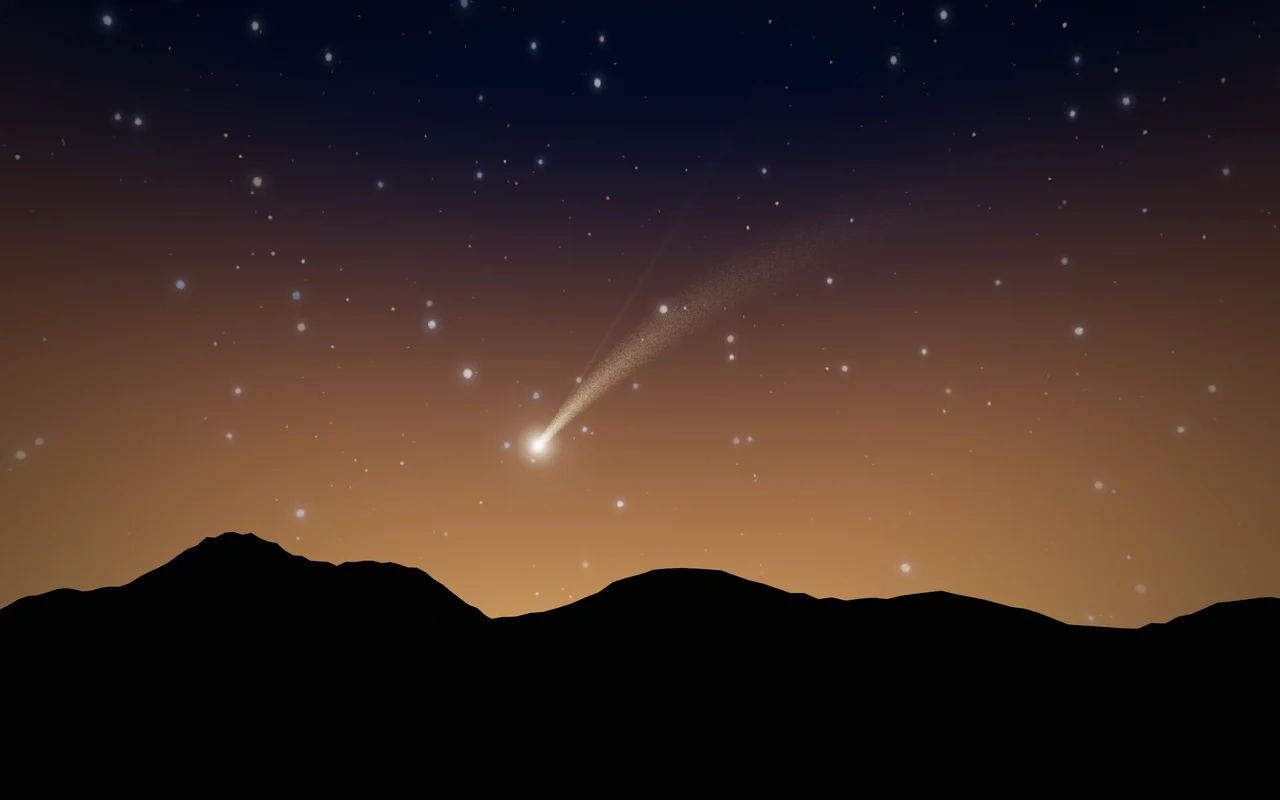
Image: Virtual Lab (3D illustration)
A comet's nucleus is a 'dirty snowball' of ice, dust and rock — about 5 km across in this case. Far from the Sun it is dark and invisible; the NEOWISE telescope spotted it in infrared, that is, heat radiation.
On 3 July the comet passed within 43 million km of the Sun, closer than Mercury's orbit. Intense heating turned its ices straight into vapour without melting — a process called sublimation — and the gas and dust formed a huge cloud and tails.
NEOWISE showed two clear tails. The yellowish, curved dust tail is pushed by the pressure of sunlight; the thin, straight, bluish ion tail is swept by the solar wind. That is why comet tails always point away from the Sun.
Many comets break apart when they pass so close to the Sun, but NEOWISE survived and brightened. On 23 July it passed 103 million km from Earth and headed back to the outer solar system.
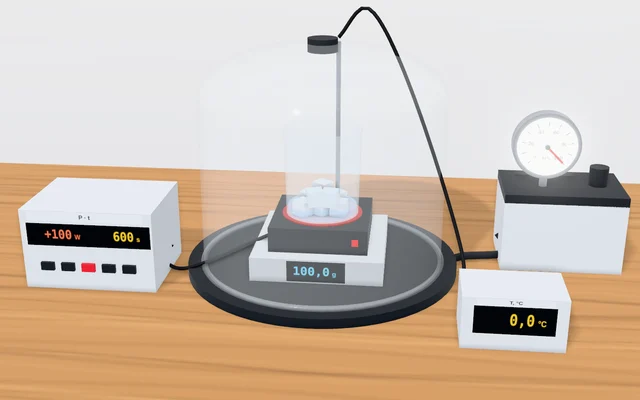 Try it in the labMelting and boiling3D lab on this site →Share on Telegram