Borexino catches neutrinos from the Sun's CNO cycle
The results were published on 25 November 2020 in Nature. The detector lies 1,400 metres beneath the Gran Sasso mountain.
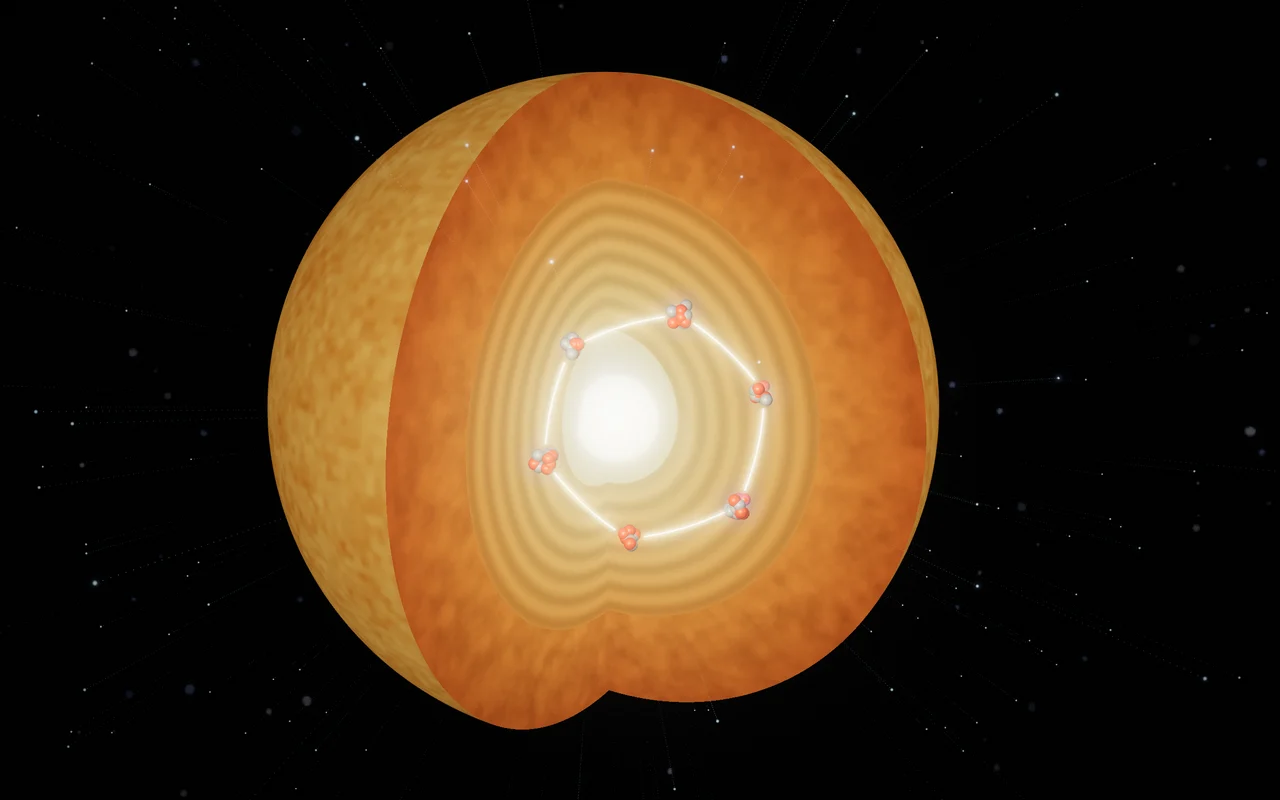
Image: Virtual Lab (3D illustration)
Stars make energy by turning hydrogen into helium, in two ways. In the Sun the main route is the proton–proton chain, supplying 99% of its energy. In the second, atoms of carbon, nitrogen and oxygen act as 'helpers', which is why it is called the CNO cycle.
Hans Bethe and Carl von Weizsäcker predicted the CNO cycle in the 1930s, and Bethe later won a Nobel Prize for it. Yet for more than 80 years it had never been seen directly in any star. Its only witnesses are neutrinos, which fly out of a star's core without hitting anything.
Borexino is a giant sphere holding about 300 tonnes of a special liquid. When a neutrino nudges an electron in the liquid, it makes a tiny flash of light. The trouble is that natural radioactivity nearby makes identical flashes, and for over a decade the team worked to purge the detector of this 'noise'.
At last they separated the faint CNO signal from the radioactive background. The result matched theory: the CNO cycle supplies about 1% of the Sun's energy, confirming the last major piece of the theory of how stars shine.
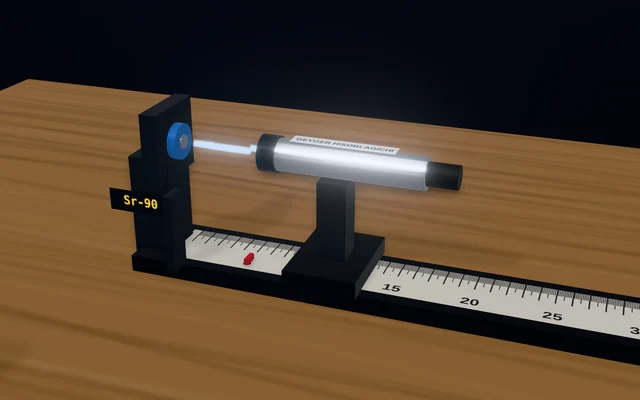 Try it in the labRadioactivity3D lab on this site →Share on Telegram
Sources: Nature (DOI) · Universität Mainz