The legendary Arecibo radio telescope collapses
The collapse happened on 1 December 2020 at about 7:55 a.m. local time; no one was hurt.
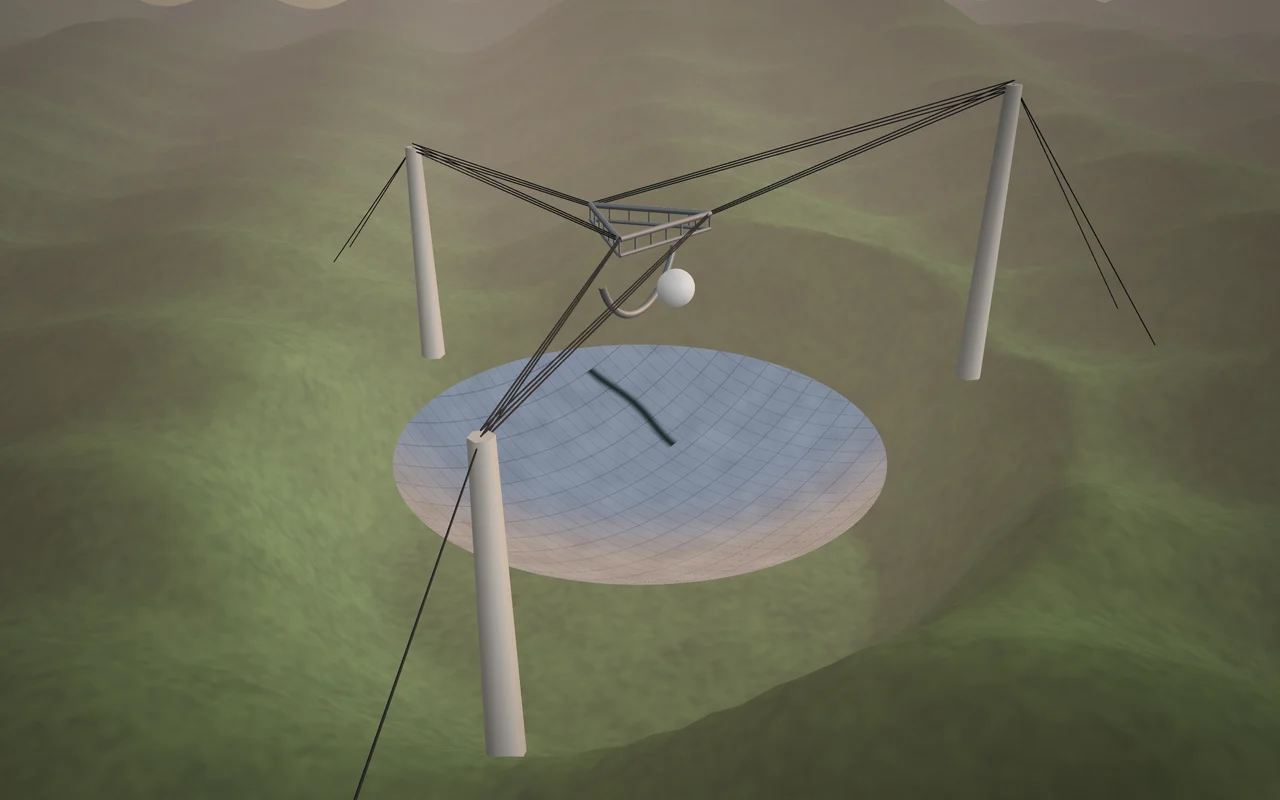
Image: Virtual Lab (3D illustration)
Arecibo was built in 1963 in a natural hollow between hills. Its dish was made of nearly 40,000 aluminium panels, and 137 m above it hung the receiver platform on steel cables strung to three towers.
On 10 August 2020 an auxiliary cable slipped from its socket and tore a 30-metre gash in the dish. On 6 November a main cable snapped, though it was carrying far less than its rated load. Engineers warned the others could fail at any moment, and on 19 November the decision was made to decommission the telescope.
Every cable stretches like a spring — the bigger the load, the more it stretches — but every material has a limit. As cables failed one by one, the load shifted onto those left. On the morning of 1 December another snapped, and the platform broke the tops off the towers and crashed onto the dish.
Arecibo made many historic discoveries: it measured Mercury's rotation period, found the binary pulsar later honoured with a Nobel Prize, and detected the first exoplanets. In 1974 it beamed the famous 'Arecibo message' to the stars.
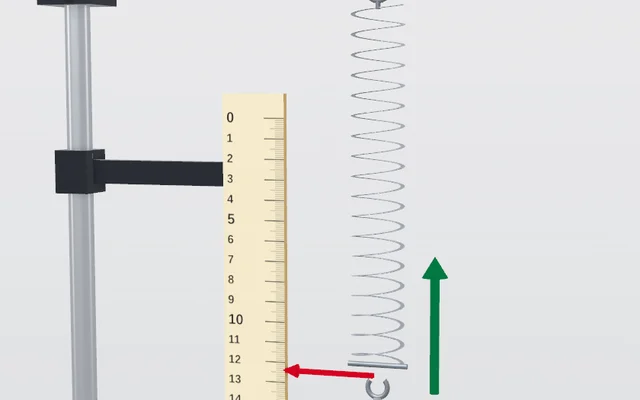 Try it in the labHooke's law3D lab on this site →Share on Telegram
Sources: Physics World · National Geographic