Neutrinos are at least a million times lighter than electrons
On 10 April the KATRIN collaboration published its new result in Science.
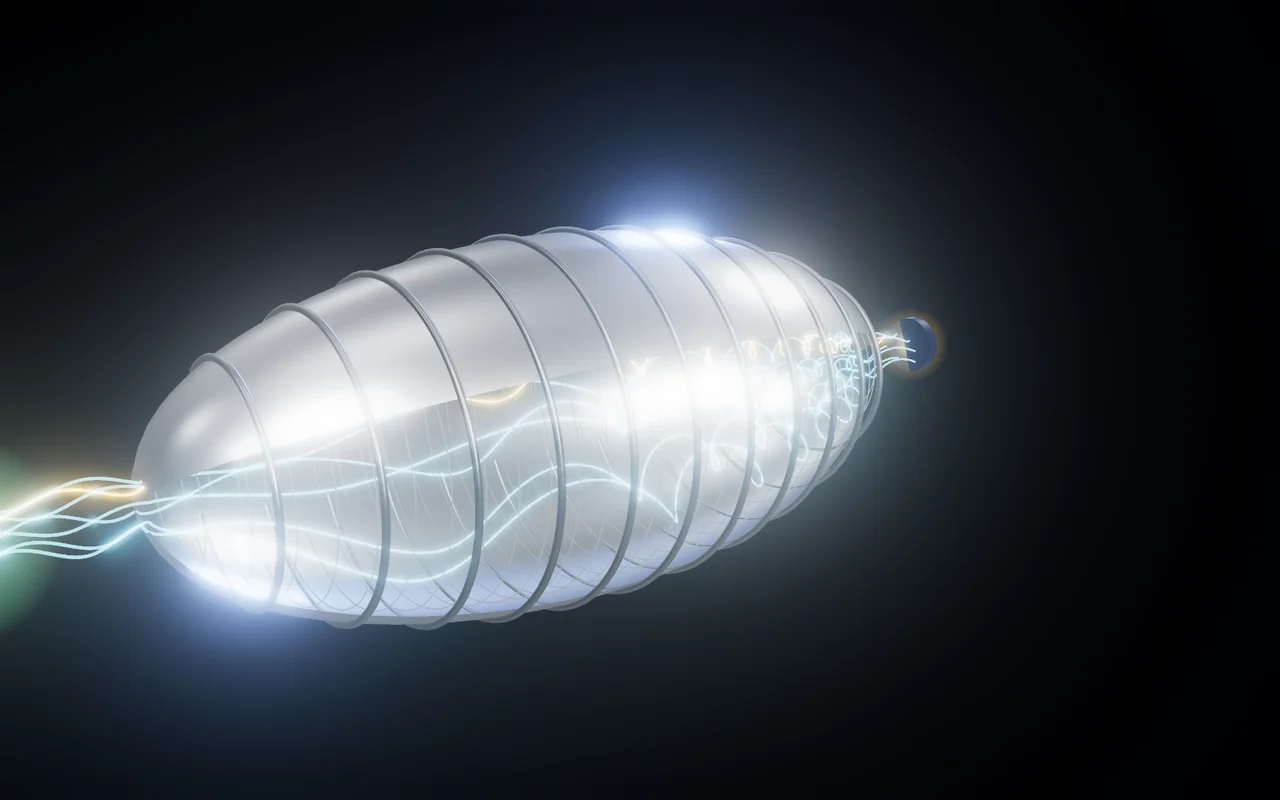
Image: Virtual Lab (3D illustration)
Neutrinos are among the most abundant particles in the Universe, yet their mass remains one of physics' big mysteries. They were long thought to be massless, until it was found that neutrinos change type as they travel, which proves they have mass. The exact value is still unknown.
KATRIN, at the Karlsruhe Institute of Technology, uses the beta decay of tritium, a radioactive form of hydrogen. In the decay an electron and a neutrino share the energy. If the neutrino has mass, the highest energy the electron can carry is slightly lower, so scientists count the electrons near that edge with extreme precision.
This takes a giant 24-metre spectrometer. The new result is based on 259 days of data from 2019 to 2021, with more than 36 million electrons recorded, six times more than before. The verdict: the neutrino mass is below 0.45 eV at 90% confidence, about 8 × 10⁻³⁷ kilograms.
Artificial-intelligence methods played a key role in the analysis. KATRIN will keep measuring until the end of 2025, after which work will start on an even more precise next-generation experiment.
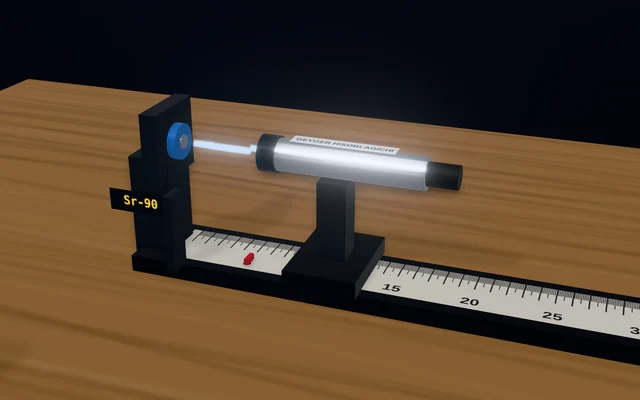 Try it in the labRadioactivity3D lab on this site →Share on Telegram
Sources: KIT · Physics World