Home › Nobel Prize laureates › 1996–2005 › 2005
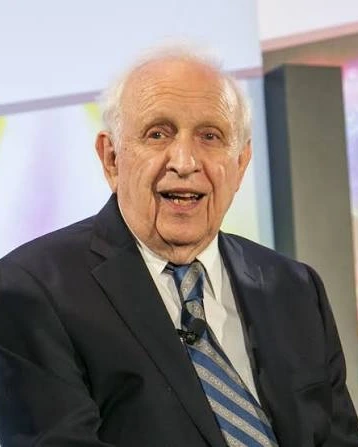
Roy J. Glauber
1925–2018 · USA
Prize motivation“for his contribution to the quantum theory of optical coherence”
Shared the prize with: John L. Hall, Theodor W. Hänsch
The discovery
Light is both a wave and a stream of particles, photons. Classical optics explained interference and coherence well as wave effects, but when scientists began studying light in the 1950s with detectors that count single photons, that explanation was no longer enough.
In 1963 Roy Glauber created a full quantum theory of the coherence of light. He described how a photon detector works using quantum laws and calculated the order in which photons arrive from different sources.
Glauber showed the fundamental difference between laser light and the light of a hot lamp: laser photons arrive independently at random times, while photons from a thermal source come “bunched” in groups. He also predicted purely quantum states of light that no wave theory can explain.
Glauber's theory became the foundation of a whole field, quantum optics.
Life
Born on 1 September 1925 in New York City, he studied at Harvard, interrupting his studies to work at Los Alamos from 1944 to 1946, and earned his doctorate at Harvard in 1949.
He was a professor at Harvard from 1952 for the rest of his life, and died on 26 December 2018.
Where it is used today
Quantum optics now underpins quantum cryptography (unbreakable encryption), single-photon sources and quantum computers.
The LIGO gravitational-wave detectors use special “squeezed” states of light, described by Glauber's theory, to boost their sensitivity.
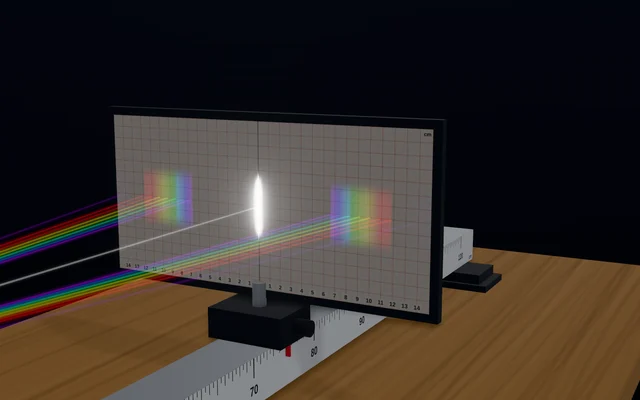 Try it in the labInterference3D lab on this site →Share on Telegram
Sources: NobelPrize.org — 2005