Home › Nobel Prize laureates › 2006–2015 › 2009
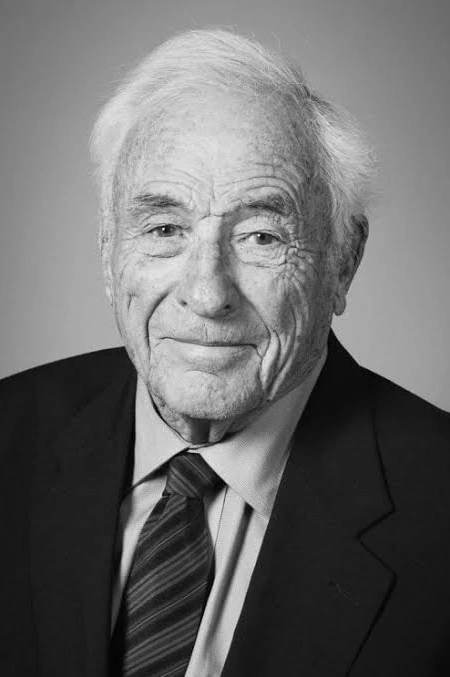
Willard S. Boyle
1924–2011 · Canada / USA
Prize motivation“for the invention of an imaging semiconductor circuit – the CCD sensor”
Shared the prize with: Charles K. Kao, George E. Smith
The discovery
In 1969 at Bell Laboratories in the USA, Willard Boyle and George Smith sketched an idea for a new electronic memory on a blackboard in less than an hour. It soon turned out to be much better at capturing images than at storing data.
A CCD relies on the photoelectric effect explained by Einstein: light striking a silicon chip knocks out electrons. The sensor's surface is divided into millions of tiny cells, or pixels, and each pixel collects electrons like a little bucket, so the more light falls on it, the more charge it gathers.
The charges are then passed row by row from cell to cell, like buckets along a chain, and measured at the edge. Each charge becomes a number, and the numbers build the picture, which is where the name “charge-coupled device” comes from.
In 1970 Boyle and Smith built the first CCD video camera. Astronomers adopted CCDs quickly because they were tens of times more sensitive than photographic film.
Life
Born on 19 August 1924 in Amherst, Nova Scotia, Canada, he was home-schooled by his mother until 14, flew as a pilot with the Canadian navy in the Second World War, and earned his doctorate at McGill University in 1950.
From 1953 to 1979 he worked at Bell Laboratories, where he led the communication sciences division, then retired to Nova Scotia. He died on 7 May 2011.
Where it is used today
CCDs launched the era of digital photography. Phones today mostly use a different kind of sensor, CMOS, but it rests on the same ideas of the photoelectric effect and pixels.
The Hubble Space Telescope, Mars rovers and many observatories use CCD cameras, and in medicine they are used for X-ray imaging and endoscopy.
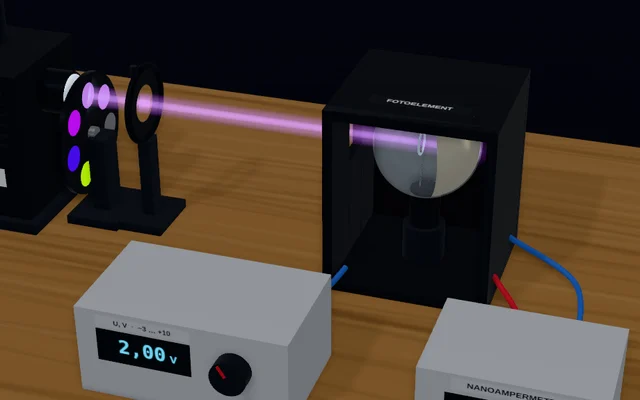 Try it in the labPhotoelectric effect3D lab on this site →Share on Telegram
Sources: NobelPrize.org — 2009