Home › Nobel Prize laureates › 2006–2015 › 2009
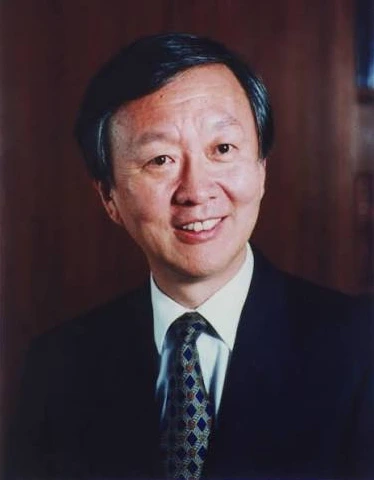
Charles K. Kao
1933–2018 · UK / USA
Prize motivation“for groundbreaking achievements concerning the transmission of light in fibers for optical communication”
Shared the prize with: Willard S. Boyle, George E. Smith
The discovery
Light is trapped inside a glass fibre by total internal reflection: a ray striking the wall at a shallow angle does not escape but bounces back in, so light follows the fibre even when it bends. But the glass fibres of the 1960s dimmed light very fast, and after a few tens of metres almost nothing was left.
In 1966 Charles Kao and George Hockham at a laboratory in Harlow, England, found the cause: the light was absorbed not by the glass itself but by impurities, mainly iron and other metal ions. Kao calculated that a fibre of very pure silica glass would keep 1% of the light after a kilometre, which was enough for communication.
Many were sceptical, but Kao championed the idea around the world, and in 1970 the US company Corning made such a pure fibre. Today's best fibres keep more than 95% of the light after a kilometre.
By 2009 the optical fibres laid around the world added up to more than a billion kilometres, enough to wrap around the Earth more than 25,000 times.
Life
Born on 4 November 1933 in Shanghai, China, he moved with his family to Hong Kong in 1949. He studied electrical engineering in London and earned his doctorate at University College London in 1965.
He worked at Standard Telecommunication Laboratories in England, then became a professor at the Chinese University of Hong Kong and was its vice-chancellor from 1987 to 1996. He died in Hong Kong on 23 September 2018.
Where it is used today
Almost all internet, telephone and TV traffic travels through optical fibres. Cables on the ocean floor link the continents, fibre is reaching individual homes, and a single fibre can carry millions of phone calls at once.
In medicine thin fibres let doctors look inside the body (endoscopy), and fibres also carry laser light, act as sensors and are used in lighting.
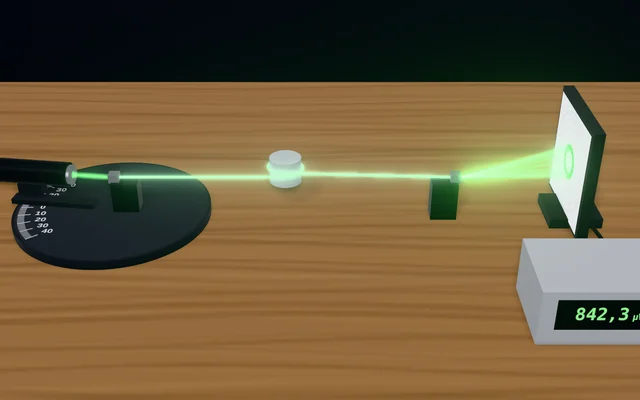 Try it in the labOptical fibre3D lab on this site →Share on Telegram
Sources: NobelPrize.org — 2009