Home › Nobel Prize laureates › 2006–2015 › 2010
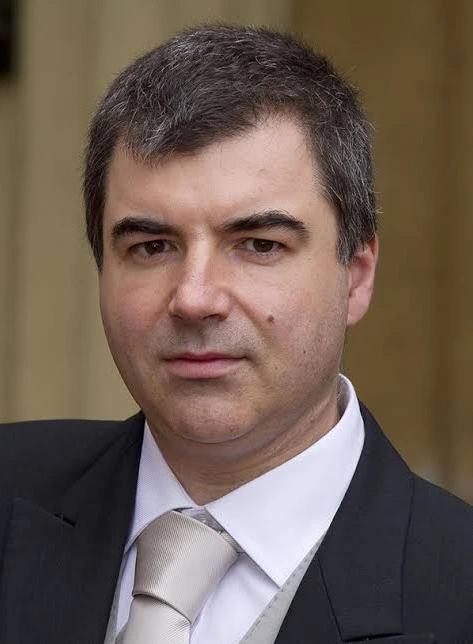
Konstantin Novoselov
born 1974 · Russia / UK
Prize motivation“for groundbreaking experiments regarding the two-dimensional material graphene”
Shared the prize with: Andre Geim
The discovery
Graphene is a single layer of carbon atoms arranged in hexagons like a honeycomb, just one atom thick. The graphite in a pencil is millions of such layers stacked together. For many years theorists believed such a thin layer could not exist on its own.
In 2004 at the University of Manchester, Andre Geim and Konstantin Novoselov used ordinary sticky tape to lift thin flakes off graphite. Sticking and peeling the tape again and again, they got down to a single atomic layer. Placed on an oxidised silicon wafer, the graphene became visible in an ordinary microscope thanks to light interference.
Graphene's properties are astonishing. It is almost transparent, absorbing only 2.3% of light, about 100 times stronger than steel of the same thickness, and conducts electricity better than copper. Its electrons move as if they had no mass, and not even helium, the smallest gas atom, can pass through it.
Geim's lab had a tradition of “Friday evening experiments”, trying out unusual ideas alongside the main work, and graphene grew out of one of these games.
Life
Born on 23 August 1974 in Nizhny Tagil, he graduated from the Moscow Institute of Physics and Technology in 1997, then worked under Andre Geim at Radboud University Nijmegen in the Netherlands, earning his doctorate in 2004.
He moved with Geim to the University of Manchester, where he became a professor, was knighted in 2012, and since 2019 has worked at the National University of Singapore.
Where it is used today
Graphene is being tried in touch screens and flexible electronics, light and strong composites, sports equipment, batteries and supercapacitors, and graphene membranes are being studied for removing salt from water.
Graphene opened the way to a whole family of two-dimensional materials such as boron nitride and molybdenum disulfide. In 2018 two layers of graphene twisted at a “magic angle” were found to become a superconductor.
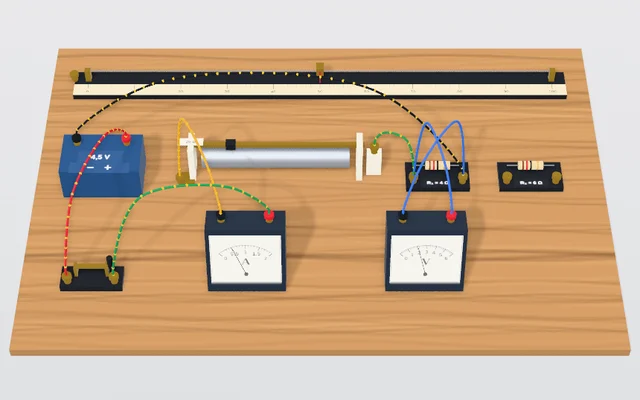 Try it in the labOhm's law3D lab on this site →Share on Telegram
Sources: NobelPrize.org — 2010